How to Ask for Lighter or Firmer Massage Pressure in Bangkok
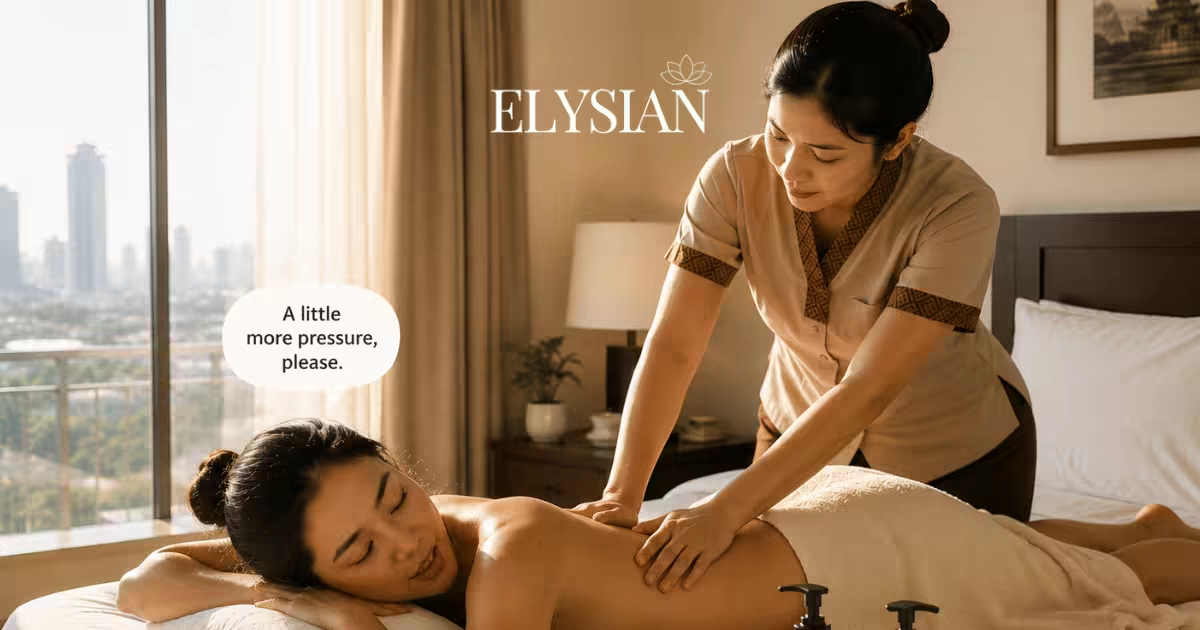
Knowing how to ask for lighter or firmer pressure is the difference between a massage you simply endure and one you genuinely enjoy, and the good news is that it is easy. You can ask for the pressure you want at any point, before the massage starts and while it is happening, and a good therapist will adjust straight away. In Bangkok this works fine in English, and a couple of Thai words make it smoother still. This guide covers exactly what to say, which areas to mention, and the phrases that get you the massage you actually want.
You can always ask, and you will not offend anyone
Asking for more or less pressure is completely normal, expected, and part of the therapist's job, so there is no need to feel awkward about it.
Thai massage, or Nuad Thai, is a trained profession. The World Health Organization has published benchmark training standards for Nuad Thai, with client safety and sound practice at their core, which means adjusting the pressure to suit the person she is working on is a basic part of what a trained therapist does. A good therapist would far rather you spoke up than lay there uncomfortable and quiet. Telling her the pressure is too much, or not enough, is useful feedback, not a complaint, and it is the single best thing you can do for the quality of your massage.
How to ask for lighter or firmer pressure
The simplest way is a short, clear sentence in the moment, and a one-to-ten scale makes it easier still.
You do not need to be so polite that you end up vague. A plain "a little lighter, please" or "can you go firmer?" is perfect, and you can say it whenever you like. If you want to be precise, name a number: "about a seven out of ten" tells the therapist exactly where to aim, and "that is perfect, stay there" locks it in. Say it early rather than waiting, since the first few minutes tend to set the pressure for the whole session.
- "A little lighter, please" or "softer, please" to ease off
- "Can you go firmer?" or "a bit stronger, please" for more
- "That is perfect, stay there" once it feels right
- Give a number out of ten if you want to be exact
- Say it in the first few minutes, and again any time it changes
A few Thai phrases that help
You never need Thai in Bangkok, since therapists are used to English, but a couple of words are handy and always go down well.
| You want | Thai | Say it like |
|---|---|---|
| Softer, lighter | เบาๆ | bao-bao |
| Harder, stronger | หนักๆ | nak-nak |
| It hurts | เจ็บ | jep |
| That is enough | พอแล้ว | por laew |
| Please stop | หยุด | yut |
Repeating the word twice, as in "bao-bao", is the natural way to say it in Thai and softens the request. A smile and one of these does the job, and most therapists will smile back, since it is not something many visitors try.
Telling the therapist which areas to focus on, or avoid
Pressure is only half of it. Say where you want the time spent, and where to leave well alone.
At the start, a quick sentence sets the plan, such as "my neck and shoulders are the worst, please spend longer there," or "please go easy on my lower back." If somewhere is injured, bruised, or simply ticklish, say so up front so she works around it, and point if that is easier than explaining. If a specific knot needs attention, tell her when she reaches it: "right there, a bit firmer." For flagging an actual injury or health condition before you book, our guide on Thai massage for first-time visitors covers what to mention.
Choosing the right pressure before you start
Part of the pressure question is settled before the massage even begins, by picking the style that matches what you want.
A gentle oil massage and a firm deep tissue session are different intensities by design, so choosing well means less adjusting later. Our guide to deep tissue versus Thai massage explains which style suits firmer or gentler work, and a traditional Thai massage sits in the firmer, more active range. Whichever you book, you can still fine-tune the pressure once it begins, so the style is a starting point, not a lock-in.
If it still is not right, say so again
Pressure can drift over an hour, and it is completely fine to speak up a second or a third time.
Therapists do not keep count, and they are not offended by a reminder. If the firm work has become too much, or you have relaxed and now want it deeper, just say so. You are not being difficult, you are helping her give you a better massage. And if something genuinely hurts in a sharp, wrong way rather than a good-ache way, say "jep" or "stop" and she will ease off at once. For a sense of how a whole session runs, our guide on what to expect from an in-room hotel massage walks through it.
Book a massage and ask for exactly what you want
The right pressure is not luck, it is a sentence. Ask early, adjust freely, and use a Thai word if you fancy it, and you will get the massage you actually wanted rather than the one you were too polite to change.
A licensed therapist can be at your hotel room in about 30 minutes, any day from 10 AM to 2 AM. Message on WhatsApp or LINE with your hotel and room number, tell us the style and pressure you like, and mention any area to focus on or avoid. You can explore in-room massage in Bangkok first if you would like.
Frequently Asked Questions
Say it plainly, in the moment. A short 'a little lighter, please' or 'can you go firmer?' is all it takes, and you can say it at any point in the session. If you want to be precise, use a scale: 'about a seven out of ten' tells the therapist exactly where to aim. Say it in the first few minutes rather than waiting, and again whenever it needs changing.
No, the opposite. Adjusting the pressure to suit you is a basic part of a trained therapist's job, so asking is helpful feedback, not a complaint. A good therapist would much rather you spoke up than lay there uncomfortable and quiet. You will not offend anyone by asking for softer or firmer work, and you can ask more than once.
For softer or lighter, say 'bao-bao'. For harder or stronger, say 'nak-nak'. If something hurts, 'jep' means it is painful, 'por laew' means that is enough, and 'yut' means stop. You never need Thai in Bangkok, since therapists are used to English, but a word or two is handy and always appreciated.
Yes, any time. Pressure can drift over an hour, and it is completely fine to speak up a second or third time. If the firm work has become too much, or you have relaxed and now want it deeper, just say so. Therapists do not keep count and are not bothered by a reminder, so adjust as often as you need.
Say it at the start, and point if it is easier than explaining. A quick sentence sets the plan, such as 'my neck and shoulders are the worst, please spend longer there,' or 'please go easy on my lower back.' If somewhere is injured, bruised, or ticklish, mention it up front so she works around it. If a specific knot needs attention, tell her when she reaches it.
Enough for a massage, yes. Therapists working with hotel guests and visitors handle pressure and area requests in English every day, so 'lighter', 'firmer', 'stop', and pointing all work fine. A few Thai words like 'bao-bao' for softer make it smoother and are appreciated, but they are a bonus, not a requirement.