Thai Massage for First-Time Visitors: What to Expect
Thai massage is one of the first things many people want to try in Thailand, and it catches a lot of first-timers off guard. It is not the quiet, oiled spa treatment you might picture. This is what to expect from a Thai massage as a tourist: an active, fully clothed session of pressing and stretching that feels more like assisted yoga than a rub-down. Once you know that going in, it is one of the best things you can do for a travel-worn body.
The short version: you keep your clothes on, there is no oil, and you are an active part of it. The therapist presses along your body and moves you through slow stretches. It can be firm, but it should never hurt, and most people walk out looser and more awake than when they arrived.
What a Thai massage actually feels like
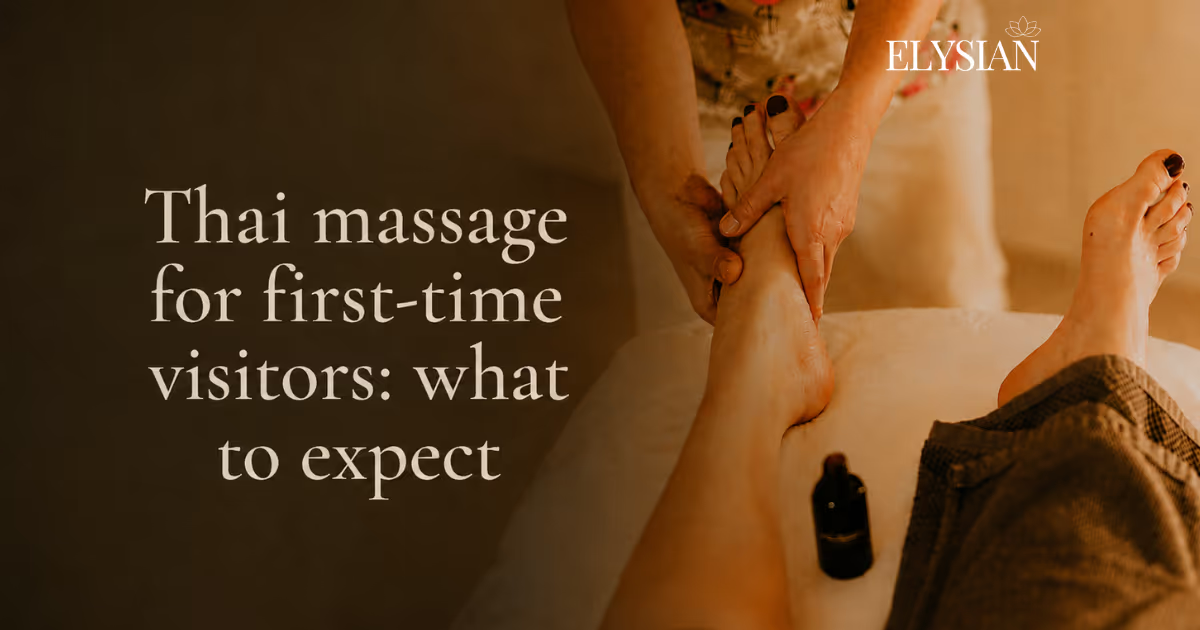
Thai massage is a dry technique done on a firm surface, with you fully clothed in loose garments. Instead of long oiled strokes, the therapist uses hands, thumbs, forearms, elbows, and sometimes feet to press along lines of the body. Then comes the part that surprises people: the stretching. She moves your arms, legs, and back into slow, yoga-like positions to open the joints and release tension. People often call it "lazy person's yoga," because she does the work and you just breathe.
It is a real tradition, not a tourist invention. Thai massage, known locally as Nuad Thai, was added to UNESCO's list of the Intangible Cultural Heritage of Humanity in 2019. It grew over centuries in temples and villages as part of Thai healthcare, and Wat Pho in Bangkok is still seen as its home. So when you book one here, you are getting the real thing at its source.
The after-feeling is different from an oil massage too. Rather than sleepy and slow, most people feel loose, tall, and awake. That makes it a good daytime treatment, or one to have before an evening out.
The moves that might surprise you
A few Thai techniques catch first-timers off guard, so it helps to know them before they happen. None of it is rough, but it is more hands-on than a spa massage.
Your therapist may use her forearms, elbows, knees, and feet, not just her hands, to apply steady pressure. She might walk her palms up the backs of your legs or press along your spine while you lie face down. At points she will sit you up, or brace with her own body, to ease you into a deeper stretch. Do not be alarmed if a joint gives a soft click as it opens, since that is normal and usually feels good. And she will likely work your whole body, including the feet, hands, and head, not only the back and shoulders. If any of it feels like too much, one word stops it.
Does Thai massage hurt?
This is the first question almost every beginner asks, and the honest answer is that it should feel firm, not painful. Thai massage uses strong pressure and deep stretches, so as a tight muscle lets go there can be a deep, satisfying ache. That is the good kind. Sharp, bright, or breath-holding pain is the other kind, and it means something needs to change.
The fix is simple: say so. A good therapist wants your feedback and will check in as she works. "Softer" and "harder" travel across any language barrier, and you can ask her to ease off a stretch or skip a sore spot at any time. The American Massage Therapy Association puts it plainly: you have the right to adjust the pressure and the techniques throughout. You are in charge of the intensity, always.
If you are nervous, tell the therapist it is your first Thai massage before she starts. She will pace it accordingly and talk you through the more unusual stretches.
Tell your therapist before you start
Thai massage is strong work, and it is not right for every body on every day. A quick word before you begin keeps it safe.
Mention any injuries, recent surgery, joint problems, high or low blood pressure, or if you are pregnant, since some stretches and pressure points are avoided in those cases. If you feel genuinely unwell rather than just travel-tired, it is better to rest and rebook. A good therapist adapts the session around whatever you tell her, working gently around a sore knee or skipping deep abdominal pressure entirely. None of this needs a doctor's note. It is the same heads-up you would give before any hands-on treatment, and it lets her give you the best session for your body.
What to wear and how to prepare
You stay fully clothed, so wear or bring loose, soft clothing you can bend and stretch in. Many shops and spas hand you a set of loose top and trousers to change into. For an in-room massage in Bangkok, the therapist brings clean clothing or you simply wear your own soft trousers and a t-shirt. There is no undressing and no oil, which is part of why some travellers prefer it.
A little preparation makes it better:
- Do not eat a big meal right before. A full stomach and deep abdominal stretches do not mix well.
- Drink some water beforehand, and more afterwards.
- Use the bathroom first. There is gentle pressure on the belly and lower back.
- Arrive or be ready on time, so your whole session goes to the massage.
Shower beforehand if you can, out of courtesy, though there is no oil to wash off afterwards. That is another practical perk of Thai massage: you can head straight back out to sightsee when it is done.
You are part of the massage
Unlike an oil massage where you lie still, Thai massage asks a little of you. The trick is to do less, not more. When the therapist lifts or rotates a limb during a stretch, let it go heavy in her hands rather than helping or tensing. Trying to assist actually makes the stretch harder for both of you.
Breathe with the work. As she leans into a stretch, a slow exhale lets your muscles open a little further. If a position feels wrong on a joint, say so, and she will adjust the angle. None of this needs to be perfect. Relax, follow her lead, and let your body be moved.
First-timer etiquette in Thailand
A little local awareness goes a long way and is genuinely appreciated. A warm "khob khun kha" or "khob khun krap" (thank you) at the end is all the Thai you need. The wai, the palms-together gesture, is a lovely way to show respect, though it is not expected as part of a massage.
Tipping is not required in Thailand, but it is a kind gesture after a good session. A small tip handed directly to your therapist, with a smile, is normal in tourist areas, though never expected. Beyond that, the etiquette is simple: be on time, keep your phone silenced, and speak up about anything you need.
How long your first session should be
Thai massage traditionally runs long, up to two hours, but you do not need to start there.
Sixty minutes is the sweet spot for a first timer. It is enough for the therapist to work the whole body without it feeling like a marathon. If you are unsure how you will take the stretching, start with a 30-minute session or a single area like the back and shoulders, and see how it feels. Once you know you enjoy it, a 90 or 120-minute session gives the therapist room to work slowly and reach everything. You can see session lengths and flat prices on our pricing page.
Where to have your first Thai massage
You have three broad choices, and each has its place.
A neighbourhood massage shop is cheap, casual, and everywhere, which makes it an easy first try. A hotel or day spa costs more and gives you a polished setting with quiet rooms and facilities. Or the therapist can come to you: an in-room massage means you have your first Thai massage in the privacy of your hotel room, with no getting dressed to travel afterwards. If you have not booked one to a room before, here is what to expect from an in-room hotel massage.
One honest note: if what you really want is a whole spa afternoon with a sauna, steam room, and pool, go to a spa. An in-room massage gives you privacy and convenience, not facilities. But for the massage itself, a skilled therapist in your room matches anything a spa offers.
Still deciding between styles? Our guide to Thai massage versus oil massage breaks down which suits which mood, and traditional Thai massage has the full detail on the treatment.
Try Thai massage on your Bangkok trip
Your first Thai massage is one of the most Thai things you can do, and it undoes exactly what long flights and long sightseeing days put into your body. Come in knowing it is firm, clothed, and full of stretches, and you will enjoy it far more.
If you would like to try one without leaving your hotel, a licensed therapist can be at your Bangkok room in about 30 minutes, any day from 10 AM to 2 AM. Message us on WhatsApp or LINE with your hotel and room number, and tell us it is your first time so we can pick the right therapist for you.
Frequently Asked Questions
Expect an active, clothed treatment with no oil. You wear loose clothing and lie on a firm surface while the therapist uses hands, thumbs, forearms, and feet to press along the body, then moves you through slow assisted stretches. It feels like someone doing yoga for you. Most first-timers find it firmer than a Western oil massage but leave feeling loose and energised rather than sleepy.
It should feel firm and satisfying, not painful. Thai massage uses strong pressure and deep stretches, so there can be a good ache as a tight muscle releases, but sharp or unpleasant pain is a sign to speak up. Tell the therapist to go softer at any point and she will adjust. You set the level, and a good therapist checks in as she works.
Loose, comfortable clothing you can stretch and bend in. Many shops and spas provide a set of loose top and trousers to change into. For an in-room massage the therapist brings clean clothing, or you wear your own soft trousers and a t-shirt. You stay fully clothed the whole time, with no undressing and no oil on the skin.
No. You do not need to be flexible to enjoy Thai massage, and improving flexibility is one of the things it does well. The therapist works within your current range and eases you a little further, never forcing a stretch. Just relax and let her guide your limbs rather than helping, and tell her if a position is uncomfortable.
Sixty minutes is a good first session. It is long enough to work the whole body without feeling like a lot for a beginner. If you want to test how your body takes the stretching first, a 30-minute or single-area session is a gentle way in. Once you know you like it, 90 or 120 minutes lets the therapist work slowly and thoroughly.
Yes. The assisted stretching opens the hips, spine, and shoulders that a long flight compresses, and it gets your circulation moving after hours of sitting still. Many travellers book a Thai massage soon after landing to undo the stiffness of the seat. If your main goal is to sleep, a calmer oil massage in the evening may suit you better.