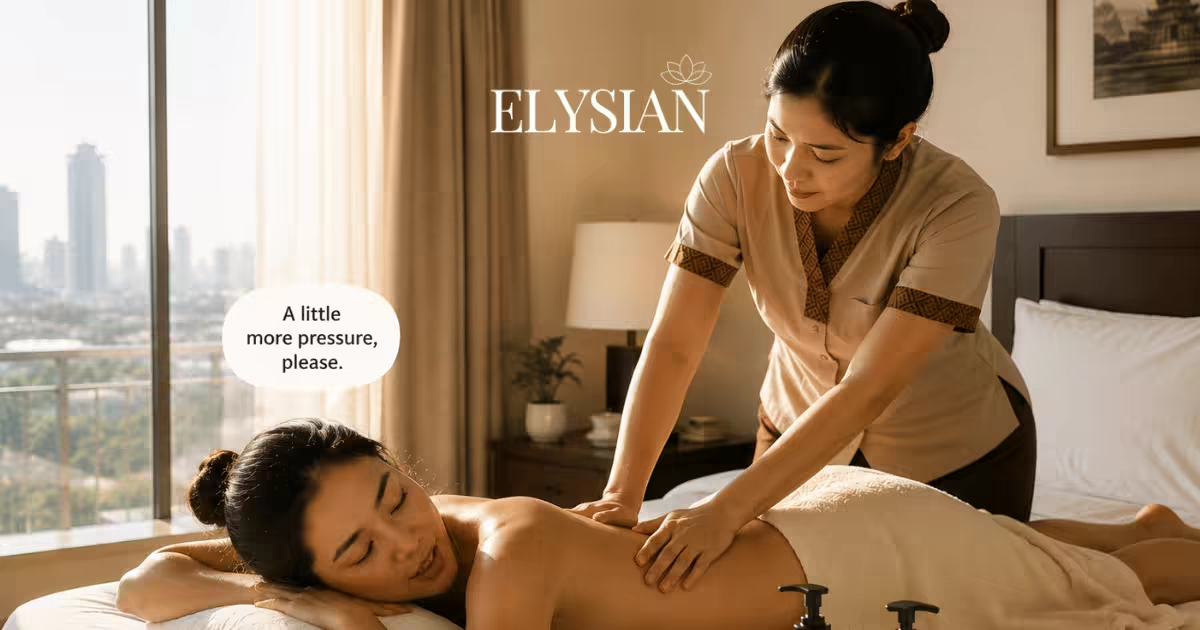
Recovery Massage for Muay Thai and Gym Training
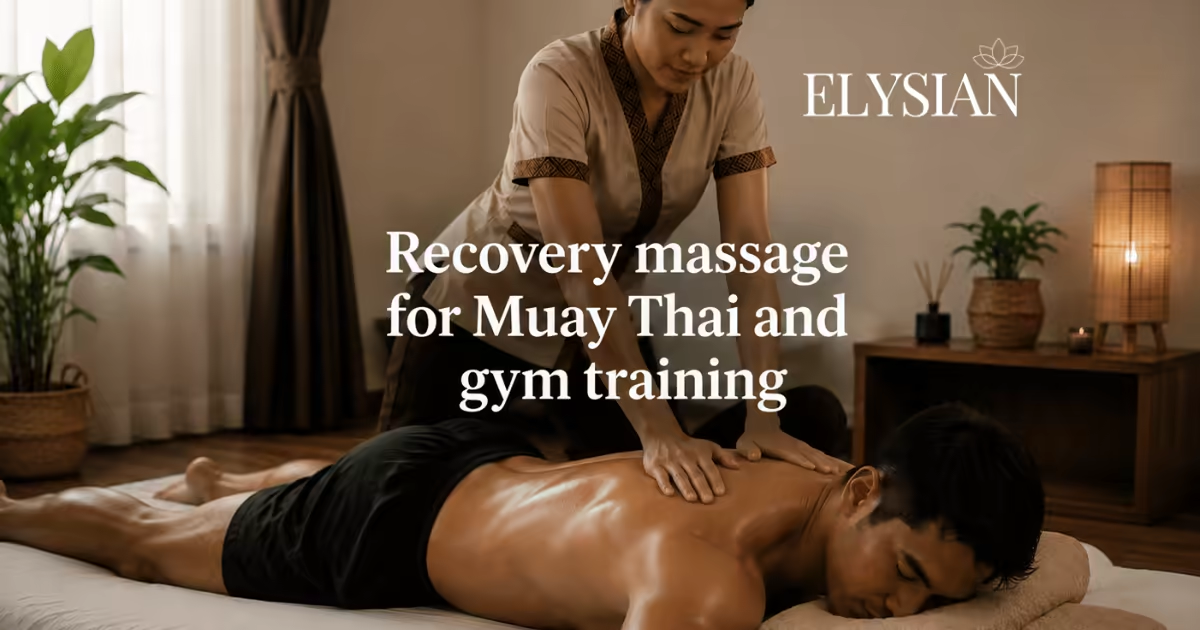
A recovery massage for Muay Thai or gym training does one main job: it loosens the tight, overworked muscles a hard session leaves behind, so you turn up to the next one moving well rather than stiff. Book traditional Thai massage for the stretching and pressure that suit a trained body, have it in the gap between sessions or the evening after the last one, and expect most of the time to go on your legs and hips, since that is where the work lands. It is recovery for worked muscles, not treatment for an injury, and that difference matters, which is covered below.
Bangkok is the centre of this. Thailand has over 5,000 Muay Thai gyms and schools, according to the Tourism Authority of Thailand, and a steady stream of visitors come to train, stay in nearby hotels, and put their bodies through two sessions a day. A good massage is part of how they keep going, and having it come to the room is part of how they save their legs for the ring.
- Book traditional Thai for tight, worked legs and hips
- Deep tissue for a specific stubborn knot, or a light oil massage on a pure rest evening
- Time it for the midday gap between sessions, or the evening after training
- Avoid a hard massage right before you spar
- A real injury is for a doctor or physio, not a recovery massage
Why a trained body needs the massage
Training loads the body in a very particular pattern, and it helps to know where before you book.
Muay Thai is a lower-body sport above all. A study in Injury Epidemiology found that the extremities, mainly the lower limbs, are the most affected region, at about 58.6% of fight injuries, which reflects how much the legs do: kicking, checking kicks, and switching stance for hours. Even well short of injury, that is where a fighter carries the most fatigue and tightness, in the shins, calves, hamstrings, and hips, with the shoulders and back adding up from clinch work and padwork. A recovery massage earns its place by going straight to those worked areas, rather than treating you evenly like a relaxation massage would.
Traditional Thai is the fighter's massage
Of the styles on offer, traditional Thai massage is the one built for a trained body.
Traditional Thai massage uses firm compression along the muscles and assisted stretching that target exactly what training tightens: short, tired legs and hips that want lengthening. Thai massage has long been the recovery tool in the camps for that reason, often with Thai liniment oil. If you carry a specific stubborn knot, deep tissue reaches deeper into that one spot, and our guide to deep tissue versus Thai massage helps you choose between the two firm styles. On a pure rest evening, when you only want to switch off, a lighter oil massage is the kinder pick. Whichever you choose, tell the therapist you train and where you feel worked, so she weights the session toward it.
When to fit it in around training
The right time follows the training day, and camps leave clear windows if you look.
Most camps run two sessions a day, morning and evening, with the middle of the day set aside for recovery. That midday break is one natural slot, once you have eaten and rested a little. The other, and often the better one, is the evening after your last session: a massage then loosens the day out of you and sets up the deep sleep that does the real recovery work. A therapist reaches most Bangkok hotels in about 30 minutes, and in-room services run until 2 AM, so even a late finish at the gym is covered. What you want to avoid is a hard massage right before training, which can leave you loose in the wrong way for sparring.
On a longer camp, you do not need one every day. A firm session every second or third day keeps the legs fresh without leaving your body nothing to push against, and you can go lighter and more often, or firmer and less often, depending on how you take it. Drink water and eat something small first, since a deep massage on an empty, dehydrated body after hard training is less pleasant than it needs to be.
Have it in your room, and save your legs
After an evening session, the last thing tired legs want is a trip across Bangkok to a spa.
This is where an in-room massage fits a training trip so well. You finish at the gym, get back, shower, and a licensed therapist comes to your hotel room, working on your own bed with fresh sheets she brings. You go straight from the massage into sleep, which is where much of the recovery actually happens, with no commute to undo the calm and no walking on already-worked legs. For someone training twice a day, keeping the recovery simple and close is part of keeping the training going.
Recovery, not repair
One distinction matters more than any other here: a recovery massage is for tired, worked, tight muscles, and it is not treatment for an injury. The two should not be confused. If you have picked up a real strain, a swollen or painful joint, a sharp pain, or anything that feels like damage rather than fatigue, see a doctor or a physio before you think about a massage. A skilled therapist can often work gently around a small, settled issue while leaving it alone, but firm work on a genuine injury can set you back. Our guide on who should not get a Thai massage covers injuries and other conditions worth flagging before you book.
Book a recovery massage on your training trip
For a body that trains hard in Bangkok, a recovery massage is a simple, effective way to stay loose and keep turning up ready. Book traditional Thai for the worked legs and hips, time it for the midday gap or the evening after training, and keep it close so your legs are saved for the ring, not the taxi.
A licensed therapist can be at your hotel room in about 30 minutes, any day from 10 AM to 2 AM, which covers the after-training hours. Message on WhatsApp or LINE with your hotel and room number, tell us you are training and where you are tightest, and we will send the right therapist. You can explore in-room massage in Bangkok and our pricing first if you would like.
Frequently Asked Questions
Yes, for loosening tired, worked muscles between sessions. A recovery massage eases the tightness that builds up in the legs, hips, and shoulders from kicking, checking, and padwork, and helps you feel looser for your next training. It is not a treatment for an actual injury, though. If you have a real strain, a swollen joint, or sharp pain, see a doctor or physio rather than booking a massage.
Traditional Thai massage is the classic choice for fighters, since its pressure and assisted stretching target exactly the tight, overworked muscles training creates. Deep tissue suits a specific stubborn knot, and a lighter oil massage is better on a rest evening when you mainly want to relax and sleep. Tell the therapist you train, and where you are tightest, so she works the right areas.
In the gap between sessions or in the evening after the last one. Most camps run two sessions a day, morning and evening, with a midday break for recovery, which is a natural window. An evening massage after training loosens you and sets up a good night's sleep before the next day. In-room services in Bangkok run until 2 AM, so a late session after evening training is easy to arrange.
Mostly the lower body, because that is where the sport works hardest. Muay Thai loads the legs, shins, calves, hamstrings, and hips through constant kicking and checking, so those are usually the tightest areas, along with the shoulders and back from clinch and padwork. Tell the therapist where you feel worked, and she will spend the time there rather than treating you evenly all over.
Yes, and it suits a training day well. Instead of finding a spa after an evening session, you shower and have a licensed therapist come to your room, working on your own bed with fresh sheets. You go straight from the massage to sleep, which is where a lot of the recovery actually happens, with no trip across the city on tired legs.
Not over the injury, and not instead of proper care. A recovery massage is for tired, worked muscles, not for a sprain, a joint problem, or a fresh knock. If you have picked something up, see a doctor or physio first. A therapist can often work gently around a settled, minor issue, but she is not a substitute for medical treatment, and firm work on a real injury can make it worse.