Deep Tissue vs Thai Massage: Which for Travellers

Deep tissue vs Thai massage comes down to one question: do you have a specific knot to dig out, or a whole body that feels stiff? Deep tissue uses slow, firm pressure to work deep into one tight area while you lie still. Thai massage is a full-body treatment, done fully clothed, that combines pressure with assisted stretching to loosen you everywhere at once. For a traveller, that usually means Thai after a long flight when you feel compressed all over, and deep tissue when one stubborn muscle, like a shoulder from a heavy bag, will not let go.
Both are firm treatments, so neither is the one to book if you just want to drift off to sleep. This guide lays out how they actually differ, how each one feels, and which suits a tired travelling body, so you can choose well rather than guess from a menu.
The quick answer
Book Thai massage when your whole body feels stiff, tight, and compressed, especially after a flight or a long day upright. Book deep tissue when you can point to the exact spot that hurts and you want it worked hard.
Neither is a gentle massage. If what you want is to be soothed to sleep, an oil or Swedish treatment is the better fit, and our guide to Thai versus oil and Swedish massage covers that choice.
Deep tissue vs Thai massage, side by side
Here is how the two compare on the things that decide it.
| Deep tissue | Thai massage | |
|---|---|---|
| Main idea | Firm pressure into deep muscle | Pressure plus full-body stretching |
| Focus | One or two problem areas | The whole body |
| Pressure | Slow, deep, sustained | Firm, but broad and rhythmic |
| Oil | Yes, on the skin | None |
| Clothing | Undressed, draped with a sheet | Fully clothed in loose garments |
| How it feels | A deep, working ache | Like being stretched loose |
| After | The area is looser, maybe tender | Loose all over, lightly energised |
| Best for | A specific knot or chronic tension | All-over stiffness and flexibility |
The short read: deep tissue goes deep in one place, Thai goes wide across everything.
Deep tissue is firm, focused, and for a specific problem
Deep tissue is the treatment to book when you can put a finger on exactly what hurts.
According to the Mayo Clinic, deep tissue massage uses slower, more forceful strokes to reach the deeper layers of muscle and connective tissue, and it is commonly used to help with muscle damage from injuries. The therapist works with oil on the skin, using fingers, thumbs, and sometimes an elbow to sink into the tight muscle and stay there, slowly persuading it to release.
That focus is the point. A deep tissue session might spend most of its time on one shoulder, one side of the neck, or the lower back, rather than treating you evenly all over. It is not the massage for a vague sense of tiredness; it is the massage for the knot you have been rubbing at all day. For a traveller, that is usually the shoulder a daypack has been hanging on, or a back that has locked up after hours in an economy seat.
Thai massage stretches the whole body loose
Thai massage treats the body as a whole rather than zooming in on one muscle.
As Healthline describes it, in Thai massage the therapist uses her hands, thumbs, elbows, forearms, knees, and even feet to stretch, pull, and rock the body and ease muscle tension, and you keep your clothes on throughout. No oil is used, and you stay in loose clothing the whole time. People often call it lazy person's yoga, because someone else does the stretching for you.
This is why it suits the just-off-a-flight body so well. Hours folded into a seat leave the hips, hamstrings, and back short and compressed, and Thai massage lengthens all of that out in one session. You finish loose from head to foot rather than worked in one spot, and most people feel lightly energised rather than sleepy, which makes it a good choice earlier in the day or before an evening out.
Which should a traveller choose?
Match the treatment to what the trip has done to you.
Choose Thai when
- You have just landed and feel stiff all over
- Your hips and back are compressed from sitting
- You want a full-body reset, not one spot
- You would like to feel loose and awake after
- You are earlier in the trip and want mobility back
Choose deep tissue when
- You can point to the exact muscle that hurts
- A daypack has left one shoulder knotted
- A specific ache has built up over several days
- You want that one area worked hard and properly
- Lighter massage has not shifted it
For a lot of travellers the honest answer is both, spaced across the trip. Thai early on to undo the flight, then deep tissue later if a specific ache sets in from all the walking and carrying.
How firm is too firm
Both of these are firm treatments, and a little discomfort is normal, but there is a line.
A deep, working ache is fine and often means the therapist is in the right place. Sharp pain, or pressure that makes you clench and hold your breath, is not, and it works against the massage, because a muscle you are bracing will not release. Say "softer" the moment you need to; it is the easiest word in the world to translate, and a good therapist adjusts at once. The same goes for a Thai stretch that pulls further than feels right. You set the ceiling, not the therapist.
Tell her about any injury, recent surgery, or a joint that does not move well before she starts, so she can plan around it. Deep tissue in particular is not the right choice over a fresh injury or an inflamed area.
When to skip both
Sometimes neither firm treatment is what your body needs, and it is worth being honest about that.
If you are simply exhausted and want to be soothed to sleep, a slow oil or Swedish massage will serve you far better than either of these, and you will not wake up tender. If you feel genuinely unwell, or a pain is sharp, radiating, or clearly from an injury rather than ordinary stiffness, skip the massage and rest or see a doctor. Firm pressure on the wrong problem makes it worse, not better.
Booking either in Bangkok
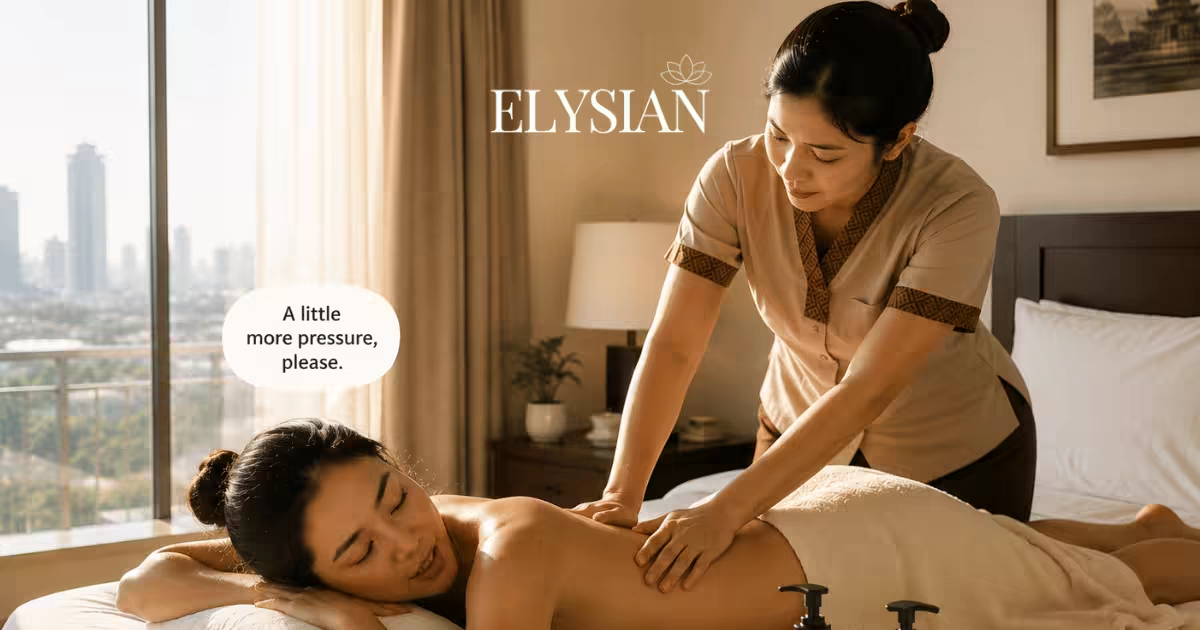
Both are on the menu, and in-room you get them on your own bed, with fresh sheets the therapist brings. A 60-minute traditional Thai massage starts around ฿1,000 and deep tissue around ฿1,400, with the full rate card on our pricing page.
A licensed therapist can be at your hotel room in about 30 minutes, any day from 10 AM to 2 AM. Message us on WhatsApp or LINE with your hotel, your room number, and where your body is asking for help, and we will send the right therapist for it. You can book in-room massage in Bangkok in a single message.
Frequently Asked Questions
Deep tissue uses slow, firm pressure to work into one problem area, like a tight shoulder or a knot, while you lie still. Thai massage is a full-body treatment done fully clothed, combining pressure with assisted stretches that move your joints and limbs through their range. Deep tissue goes deep in one spot; Thai works wide across the whole body. Deep tissue is usually done with oil; Thai uses none.
It depends on how your body feels. After a long flight, when your hips and back feel compressed and stiff all over, Thai massage stretches the whole body back out. If you have one stubborn knot, like a shoulder sore from a heavy daypack, deep tissue targets that spot far better. For general travel stiffness, most people do well with Thai; for a specific ache, deep tissue.
It can feel intense, but it should never be sharp or unbearable. Deep tissue works slowly into tight muscle, so you may feel a firm ache that many describe as a good hurt, easing as the muscle releases. Tell the therapist if it crosses into real pain and she will lighten the pressure. Pain that makes you tense up is counterproductive, so speak up.
Neither is a gentle, sleepy massage; for that, an oil or Swedish treatment is the better pick. Thai leaves most people loose and lightly energised rather than drowsy, thanks to the stretching. Deep tissue leaves the worked area looser and often a little tender for a day. If pure relaxation is the goal, both are the wrong choice.
Yes, and it is a smart way to travel. Many visitors book Thai massage early in the trip to undo the flight, then deep tissue later if a specific ache builds up from walking or carrying bags. Space them out rather than stacking them, since deep tissue in particular can leave a muscle tender, and give the worked area a day before going again.
At an in-room service, a 60-minute traditional Thai massage starts around 1,000 baht and deep tissue around 1,400 baht, since deep tissue is more specialised work. Street shops charge less, and hotel spas more. Prices rise with length, so a 90 or 120-minute session costs proportionally more. Check the full rate card before you book.
It depends on the cause. If your back is stiff and tight all over from sitting on a plane or a long day upright, Thai stretching often helps most. If the pain is a specific knot or a muscle that feels locked, deep tissue targets it directly. If the pain is sharp, radiating, or from an injury, see a doctor before booking any massage.