What to Expect From an In-Room Hotel Massage as a Guest
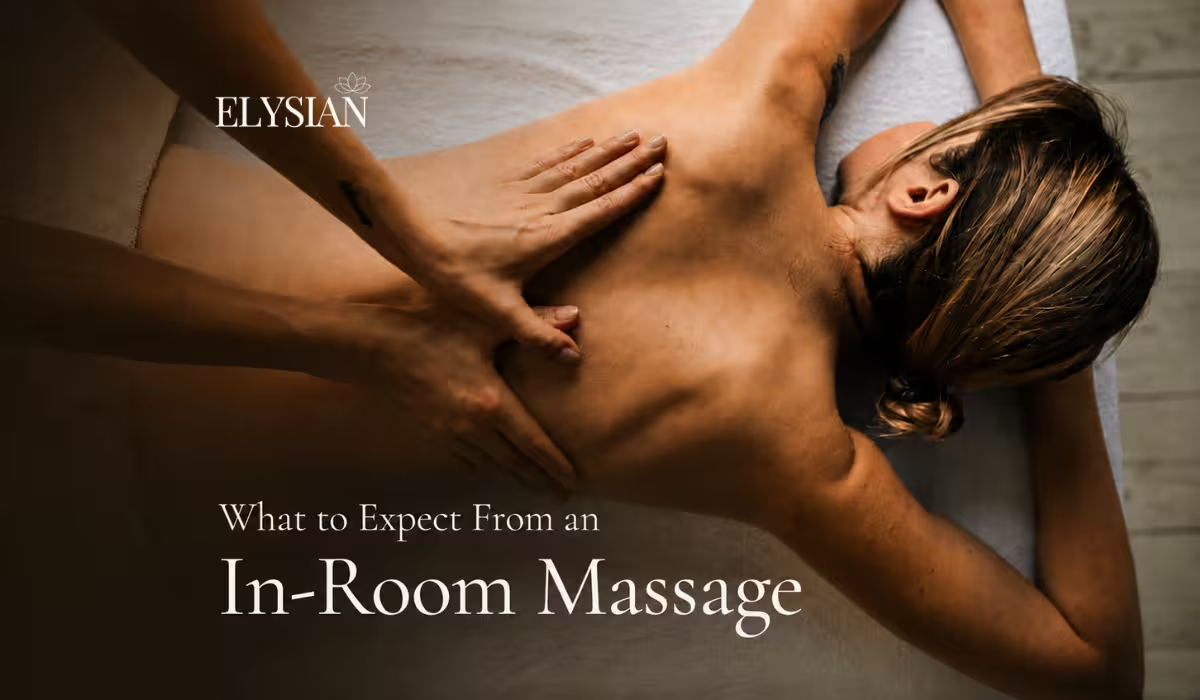
Booking your first in-room massage and not sure what happens once the therapist knocks? Here is what to expect from a hotel massage, from the first message to the moment you fall asleep afterwards. A good in-room massage is simple by design. You book, a licensed therapist comes to your room, lays fresh sheets on your bed, works through the treatment you chose, and leaves you ready to rest. You never wait in a lobby, set up a table, or travel home afterwards.
The experience comes to you. In Bangkok that usually means a therapist at your hotel door in about 30 minutes, any time from 10 AM to 2 AM. Below is the full walk-through, one step at a time, so none of it feels unfamiliar on the night.
Booking is a message, not an appointment desk
An in-room massage does not run on an app or a calendar. You send a message, and a person answers.
When you book, have a few details ready. A good service will ask for your hotel name and full address, since a big city has many hotels with similar names, your room number, a phone number that works locally, and the treatment and length you want. If you are not sure which massage to pick, say how you feel and let them suggest one. That short exchange is also where you sort timing, price, and any questions before anyone travels to you.
This is the moment to confirm your hotel is happy with a visiting therapist. Most are, but policies vary from one property to the next. Our guide to in-room massage rules at Bangkok hotels covers reception check-in and the few hotels that ask you to register a visitor first.
Your therapist arrives at your door
Once the booking is set, the therapist travels to you with everything she needs. She does not need anything from your room beyond a bit of space.
At most hotels she checks in at reception first. She will show ID, confirm your room number, and sometimes leave ID at the desk during the visit. It takes a couple of minutes and adds a layer of security, since the front desk knows who is visiting you. Then she comes up and knocks at the time you booked.
She works on your bed, not a table
Here is the part that surprises most first-timers. There is no massage table.
For an in-room massage the therapist works on your own bed. She brings clean sheets for every session and lays them over the bed before starting, so you get a fresh, hygienic surface without any equipment to set up. You do not need to clear floor space or move furniture. Just make sure the bed is reachable and clear anything off it. If your room is tight, mention it when you book and she will plan around it.
A spa gives you a staged treatment room with dim lighting and piped music. In-room massage trades that staging for privacy and the fact that you never have to leave. Set the air conditioning to something comfortable before she arrives, around 24 to 25 degrees, since you will be lying still and a touch warmer feels right.
Set your room up before she knocks
A little preparation makes the session better, and none of it takes long.
Put your valuables out of sight first. Use the room safe for a passport, cash, or a laptop, the same habit you would keep for any visitor. Clear the bed and move anything off it so there is room to lay the sheets. Set the lights low if you like, keep a glass of water within reach for afterwards, and silence your phone so nothing breaks the hour.
If you are travelling with someone, decide in advance whether they stay in the room or step out. Either is fine. It is your space, and a good therapist works around whatever you are comfortable with.
A short chat comes before the massage
Every good session starts with a quick conversation, usually two or three minutes. This is not small talk. It shapes the whole massage.
Tell her about anything that matters: recent injuries or surgery, pregnancy, skin conditions, blood-pressure issues, and any area you would rather she avoided. This is standard practice everywhere. The American Massage Therapy Association describes the same pre-session check, where the therapist asks about your health and goals so she can tailor the work and keep it safe.
It is also where you set the pressure you like and point out the spots that need the most attention. A stiff lower back from a long flight, a knot between the shoulders, tight calves. The more specific you are, the better the hour goes.
What to wear, and how draping works
What you wear comes down to the treatment, and this is the question most first-timers quietly worry about.
Traditional Thai
- Stay fully clothed the whole time
- Wear loose, soft clothing you can stretch in
- The therapist uses pressure and assisted stretches
Oil treatments
- Undress to your own comfort level
- Many guests keep underwear on
- You stay covered by a towel or sheet throughout
For oil work, draping is the rule that keeps it comfortable and professional. Only the part being worked on is uncovered at any moment, and the rest of you stays under the sheet. The AMTA puts it plainly: you have the right to decide how much you undress and to adjust or stop at any point. You are in charge, always.
If you are choosing between styles, the page on traditional Thai massage explains the clothed, stretch-based approach in more detail.
What it typically costs
Prices for an in-room massage are usually flat and quoted up front, so you know the full amount before anyone travels to you. A good service does not add surprise fees at the end.
As a rough guide, here is what the common treatments run by length:
| Treatment | 60 min | 90 min | 120 min |
|---|---|---|---|
| Traditional Thai | ฿1,000 | ฿1,200 | ฿1,400 |
| Aromatherapy oil | ฿1,200 | ฿1,400 | ฿1,600 |
| Deep tissue | ฿1,400 | ฿1,600 | ฿1,800 |
A few hotels add a small fee for an outside visitor, usually a couple of hundred baht, so ask about that when you book. You can see the full treatment list and prices on the pricing page.
During the massage, speak up, then let go
Once the massage begins, your only real job is to relax. But a few words at the right moment make it much better.
Pressure is the big one. Massage should feel like good, useful work, not a fight. If it is too light, ask for more. If something hurts in a bad way rather than the satisfying way a knot releases, say so straight away. "Softer" and "harder" translate easily, and a professional adapts on the spot. The same goes for the room. If you are cold, or the music is not for you, or you would rather not talk, that is all fine to say.
Beyond that, let her guide you. During Thai stretches, stay loose and let her move your limbs rather than helping. Focus on your breathing. This is your time, and the less you manage it, the more you get from it.
After it ends, you are already home
When the session finishes, get up slowly, have some water, and, the quiet advantage of booking to your room, you do not go anywhere. You are already where you want to be, with no lobby to cross and no ride to catch. For the full picture of what helps afterwards, from showering to next-day soreness, see our guide to what to do after a massage.
That matters most on your first night somewhere new. Your brain does not fully power down in an unfamiliar bed. In a 2016 Brown University study published in Current Biology, researchers found that one hemisphere stays more alert and sleeps less deeply on the first night in a new place, a pattern they named the "first-night effect." An evening massage that settles your nervous system gives you a real head start against exactly that, so you drop off more easily in a bed your body still reads as strange.
On tipping, nothing is added to your bill and a tip is never expected. If you want to show appreciation it goes straight to the therapist, and our note on tipping a private massage therapist covers the normal range.
When an in-room massage is not the right choice
An honest guide has to say when this is the wrong call, because sometimes it is.
If what you really want is the full spa ritual, with a sauna, a steam room, and a pool to move between, book a spa. A therapist coming to your room gives you privacy and convenience, not facilities. There is no way to bring a steam room to a hotel floor.
Skip the massage, too, if you feel genuinely unwell rather than just travel-tired. The US National Center for Complementary and Integrative Health notes that massage is low-risk but not risk-free, with rare serious effects, and advises anyone unsure whether it suits their health to check with a doctor first. Massage is a good way to unwind a stiff, tired body. It is not treatment for being sick, and a professional will happily rebook you for when you feel better.
Booking a massage to your Bangkok hotel
For most guests, an in-room massage is the easy version of a spa visit. You book by message, a licensed therapist arrives in about 30 minutes, and the whole thing happens in your own room, any day from 10 AM to 2 AM.
If you want to arrange one, explore in-room massage in Bangkok and message us on WhatsApp or LINE with your hotel, your room number, and the treatment you want. Tell us anything you are unsure about and we will walk you through it before we send anyone over.
Frequently Asked Questions
You book by message, giving your hotel name, room number, and the treatment you want. A licensed therapist travels to you, checks in at reception, and comes up to your room. She brings fresh sheets and lays them over your own bed, so there is nothing for you to set up. After a short chat about pressure and any sore spots, the massage runs for the time you booked, and when it ends you are already where you want to be for the night.
It depends on the treatment. For traditional Thai massage you stay fully clothed in loose, comfortable clothing. For oil treatments you undress to your own comfort level, and many guests keep their underwear on. Either way you stay covered by a towel or sheet the whole time, with only the area being worked on uncovered. You are always in control of how much you take off.
No. For an in-room massage the therapist works on your own bed, laying down fresh sheets she brings for every session. There is no table to assemble and no floor space to clear. Just make sure the bed is accessible and anything on it is moved aside before she arrives.
Most sessions run 60, 90, or 120 minutes, and that is the time on the table, not counting arrival and a short chat at the start. Sixty minutes suits a specific area or a light reset. Ninety minutes is the comfortable full-body length. Two hours is for when you want to fully unwind and have the evening free.
If you can, yes. A quick shower beforehand is considerate, and clean skin also takes oil better during oil treatments. It is not required, but being showered and ready when the therapist arrives means your whole booked time goes to the massage rather than to waiting.
Most guests are surprised by how normal it feels within a few minutes. A professional therapist sets a calm, businesslike tone from the door, explains what will happen, and keeps you covered throughout. In Bangkok, booking a therapist to a hotel room is routine, so front desks and therapists both handle it as a matter of course.