Massage for Sore Shoulders From Luggage and Backpacks
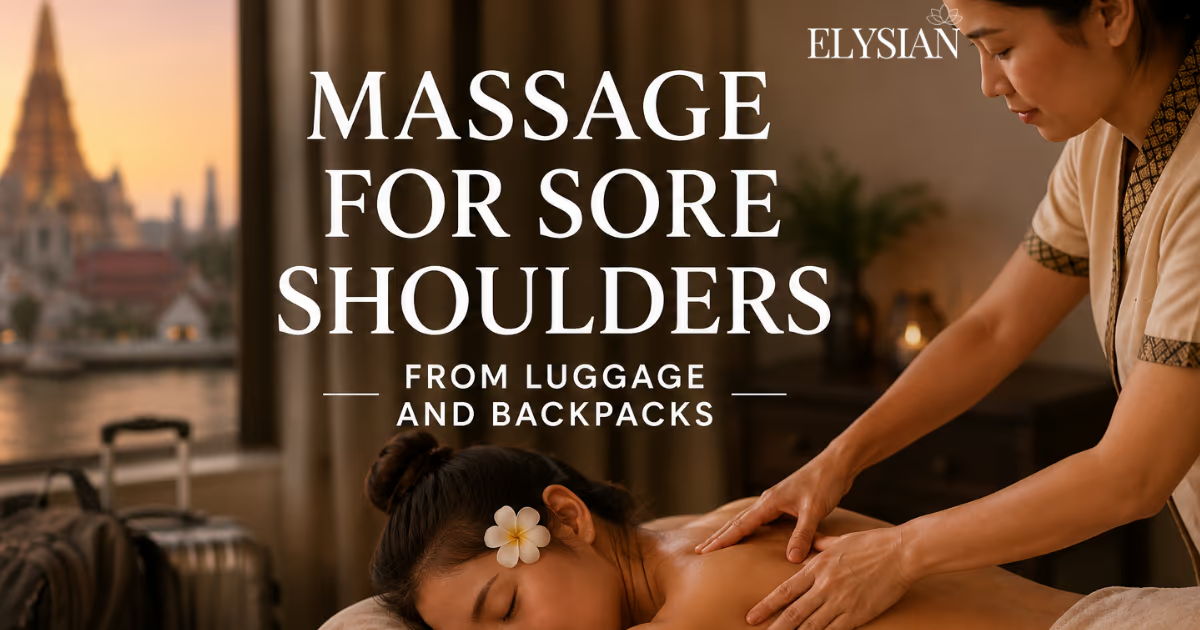
Yes, a massage helps sore shoulders from carrying bags, and deep tissue is usually the one to book. A day of hauling a backpack, a camera bag, and a shoulder tote around a new city leaves the muscles across the top of your shoulders and the base of your neck knotted and sore. That is the exact tension a good massage for travel shoulder pain is built to release, and in Bangkok a therapist can work on it during an in-room massage in your own hotel room.
If you are pressed for time, book a deep tissue session, tell the therapist it is bag-carrying tension across the shoulders and neck, and ask her to keep the hour there rather than working your whole body evenly. Below is why travel loads the shoulders the way it does, which treatment fits, and how to stop it building up again.
Why travel wrecks your shoulders
Travel is hard on the upper body in a way most people do not expect until the second or third day.
A loaded backpack sits heavy on both shoulders, and the muscles across the top have to work the whole time to stabilise it. A shoulder bag or camera strap is worse in a different way, because all the weight lands on one side, so that shoulder hikes up and the opposite side of your neck strains to keep you level. Wheeling a heavy suitcase and lifting it on and off trains, into overhead bins, and up hotel stairs adds sharp loads on top of that.
There is a posture problem too. A heavy pack drags you into a head-forward position, and that position multiplies the strain on your neck. Cleveland Clinic describes it well: your head weighs about 10 to 12 pounds upright, but tilt it forward and the load your neck carries climbs steeply, feeling more like 27 pounds at a slight angle and up to 40 or more as you lean further. Your bag does the same thing your phone does, and it does it for hours.
The result lands in the same few places every time: the tops of the shoulders, the base of the neck, and the band of muscle between the shoulder blades.
Deep tissue is the massage for a bag-loaded shoulder
For knots that come from carrying weight, deep tissue is the treatment that reaches them.
Deep tissue uses firm, slow pressure that works through the surface muscle into the deeper layers where bag tension settles. A therapist can find the tight band along the top of your shoulder, the knot at the base of your neck, and the sore points between your shoulder blades, then work each one directly. A lighter oil massage feels pleasant, but for a genuinely knotted shoulder it often glides over the problem rather than into it. Our deep tissue massage page has the full detail on how it works.
Say what you need at the start. Tell the therapist it is bag-carrying tension across the shoulders and neck, and ask her to spend the session on the upper body rather than dividing the hour evenly. Sixty minutes is plenty when it is all aimed at one region.
A word on pressure. Deep tissue on an already-sore shoulder can be intense, and it should feel like firm, useful work, not a fight. If it crosses into sharp pain, say so, and a good therapist eases off at once.
When Thai or oil suits your shoulders better
Deep tissue is not the only answer, and some shoulders want a different approach.
If your shoulders and upper back feel stiff and locked rather than knotted, traditional Thai massage may serve you better. It opens the shoulders with assisted stretches and gentle mobilisation, which is what a stiff, rounded upper back often needs after days hunched under a pack, and it stretches the chest muscles that shorten when you round forward. Our guide to Thai versus oil massage helps you choose between the two.
If the tension is mild and you mostly want to unwind, a flowing oil massage across the shoulders and neck is a softer option. It will not dig into a deep knot, but for light, tired shoulders it is enough, and it helps you sleep.
When the stiffness is in your neck, not your shoulders
Bags load the shoulders, but travel reaches the neck from another direction too. A night half-asleep upright on a plane or a long bus, with your head lolling to one side, leaves the neck stiff and sore on its own.
If your neck is the main complaint, say so, because it changes how the therapist works. Deep tissue can still ease the muscles at the base of the neck, but gentle Thai-style neck mobilisation, slow turns and stretches rather than hard pressure, often suits a travel-stiff neck better. The neck is a place to go carefully, so a good therapist keeps the pressure moderate and never forces a turn. If turning your head is sharply painful or limited, mention it and skip the deep work there.
Point your therapist to the exact spots
A massage for shoulder pain is only as good as the information you give at the start. Two minutes of pointing saves the hour.
- The tops of the shoulders, where a backpack or strap sits
- The base of the neck, where a forward-head posture pulls
- Between the shoulder blades, the band that aches after a loaded day
- The specific side you carry a one-shoulder bag on
- Any spot that is sharp rather than just sore, so she can be careful there
If you always sling your bag on the same shoulder, mention it. That habit builds tension in a predictable pattern, and a therapist who knows about it can work both the overloaded side and the neck that compensates on the other.
Carry smarter so it does not come back
A massage resets your shoulders, but how you carry your bags decides whether the tension returns by tomorrow afternoon.
The single best fix is a proper backpack worn on both shoulders, not slung on one. The American Academy of Orthopaedic Surgeons advises using both straps and keeping the load manageable by taking out what you do not need for the day. Pack the heavy things low and close to your back rather than at the top. If you must use a one-shoulder bag, switch sides through the day instead of always loading the same one. And on a travel day, use the waist strap if your pack has one, since it moves weight off your shoulders and onto your hips.
None of this is dramatic, but together it means the massage you booked actually lasts.
Simple relief you can do in your hotel room
A massage does the deep work, but a few easy moves keep your shoulders loose between sessions, and they take about two minutes in your room.
Roll your shoulders slowly backwards ten times to unstick the tops. Stand in a doorway, rest your forearms on the frame, and lean gently through it to open the chest that a pack rounds forward. Drop one ear toward that shoulder to lengthen the side of your neck, hold for a slow count, then swap sides. A warm shower aimed at the tops of your shoulders, or a few minutes with a heat pack from any pharmacy, softens the muscle before bed.
None of this replaces a proper massage on a badly knotted shoulder. But on the days between, it stops the tension setting hard, and it feels good after a day under the straps.
When shoulder pain is more than tired muscles
Most travel shoulder pain is just overworked muscle, and that is exactly what massage is for. A few signs mean it is something else, and it is worth being clear about them.
If you feel numbness, tingling, or a shooting pain running down your arm or into your hand, that points to a nerve rather than a muscle, and a massage is not the answer. The same goes for pain that came on suddenly when you lifted a heavy case, which can be a strain or worse. In those cases, see a doctor rather than booking a session, and do not let a therapist work hard on an area that is sharply painful.
And if you simply want a full spa afternoon with a sauna and steam room, go to a spa. An in-room massage gives you focused work in private, not facilities.
For the ordinary knotted, aching shoulders that a week of bags leaves behind, though, a focused massage is the fastest relief there is.
Book a massage for your travel-worn shoulders
A backpack, a camera, and a city full of stairs will find your shoulders by the end of the day. A deep tissue session aimed straight at them, in the evening once the carrying is done, is the quickest way to undo it. If your legs are tired too, our guide to a massage after sightseeing covers the whole-body version.
A licensed therapist can be at your hotel room in about 30 minutes, any day from 10 AM to 2 AM. Message us on WhatsApp or LINE with your hotel and room number, tell us it is your shoulders and neck, and we will send someone who works deep. You can see every treatment and price on our pricing page.
Frequently Asked Questions
Deep tissue is usually the best choice. Carrying a heavy backpack or shoulder bag leaves deep knots in the upper back, shoulders, and base of the neck, and deep tissue reaches the layers where that tension settles. A lighter oil massage feels nice but often does not get deep enough. Tell your therapist it is bag-carrying tension in the shoulders and neck, and ask her to spend the session there rather than working the whole body evenly.
Yes, for the muscular tension, which is what most bag-carrying pain is. A backpack pulls you into a head-forward posture and loads the muscles across the top of the shoulders and the base of the neck. Massage releases that tension, improves blood flow to the tired muscles, and eases the stiffness. It will not fix a pinched nerve or an injury, so if you feel numbness or shooting pain down the arm, see a doctor instead.
Sixty minutes is enough if you want the therapist focused on the shoulders, neck, and upper back. Ask her to concentrate there rather than spread the hour over your whole body. Ninety minutes is better if your lower back and legs are tired too, from a day of walking on top of the bag-carrying, so she can reach everything without rushing the shoulders.
It depends on how the shoulders feel. If the muscles are knotted and tight, deep tissue works into those specific spots with firm, slow pressure. If your shoulders and upper back feel stiff and locked rather than knotted, Thai massage opens them with assisted stretches and shoulder mobilisation. If you are not sure, describe it when you book and the therapist will pick the right approach.
The one you carry the bag on, and the opposite side of your neck. Carrying a bag on one shoulder loads that side hard, but your body leans and braces to balance it, so the neck often aches on the other side. Point out both when the therapist starts, and mention if you always sling the bag the same way, since that pattern shapes where the tension builds.
Yes, and the evening you arrive or finish sightseeing is a good time. A therapist comes to your hotel room, so you do not have to carry the bag any further to reach a spa. Book it once you are done hauling luggage for the day, and the session undoes the strain rather than being undone by more carrying afterwards.