The Best Massage to Relax After a Day of Sightseeing
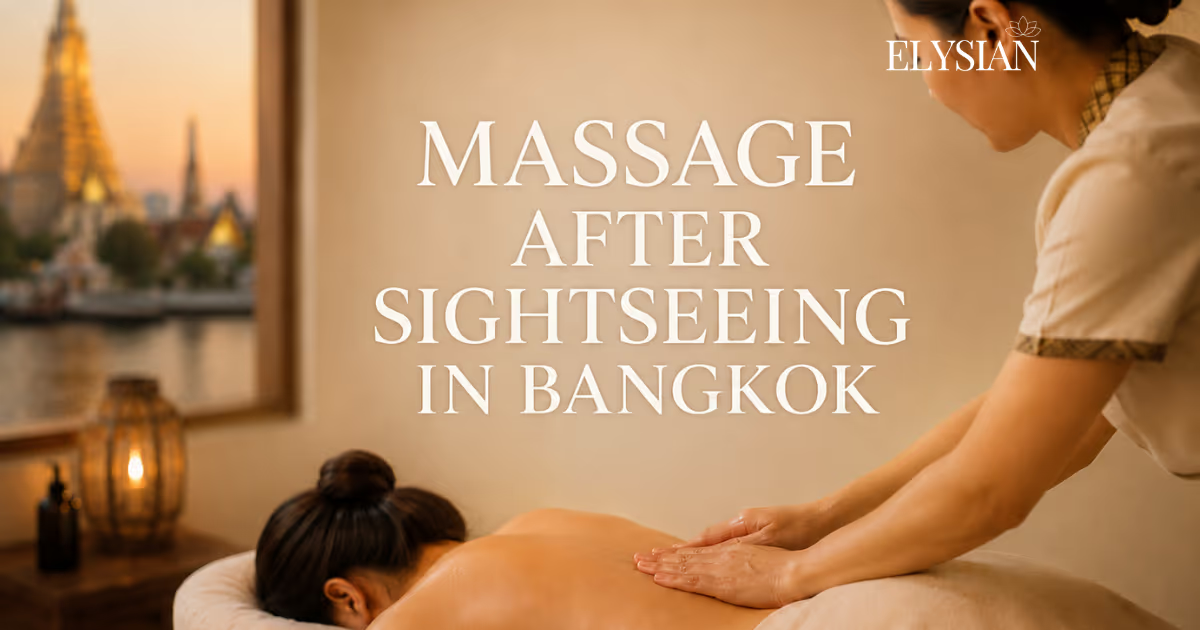
You have walked through temples, crossed markets, queued for a boat, and climbed more stairs than you expected. Now your feet are throbbing and your legs feel like they belong to someone else. The best massage after sightseeing depends on which part of you gave out first: traditional Thai for stiff hips and tight calves, a flowing oil massage for heavy, swollen legs, and deep tissue for the knots a daypack leaves in your shoulders.
Book it for the evening, once the walking is done, and ask the therapist to spend extra time on your legs and feet. Sixty minutes takes the edge off, and ninety is better after a long day. In Bangkok you do not even need to go out again, because a therapist can come to your hotel room.
What a day of sightseeing actually does to your body
Sightseeing is exercise wearing a disguise. You are not in a gym, so it does not feel like a workout, but hours upright on hard pavement add up in a very specific pattern.
Your feet take it first. Then your calves, which have been pushing you along all day, followed by the hamstrings and hip flexors that stiffen from constant walking. Your lower back joins in from the hours of standing. And if you carried a daypack with water, a camera, and a jacket you never wore, your upper shoulders and neck have been quietly loaded the whole time.
Then there is the swelling. Being on your feet all day makes ankles and feet puff up, and there is a simple reason. As Harvard Health explains, gravity pulls blood into the veins of your legs, and some of the water in the blood enters the tissues of your legs and feet, causing them to swell. It is normal after a long day and it settles once you get off your feet. In Bangkok heat, it tends to be worse.
The best massage after sightseeing, by how you feel
There is no single answer, so match the treatment to the complaint. This is the table I actually use when a guest messages after a long day.
| If this is what hurts | Book this | From (60 min) |
|---|---|---|
| Sore feet, tight calves, stiff hips | Traditional Thai | ฿1,000 |
| Heavy, swollen legs and a racing mind | Aromatherapy oil | ฿1,200 |
| Deep knots in shoulders and neck | Deep tissue | ฿1,400 |
| Generally worn out, want to sleep | Swedish relaxation | ฿1,000 |
All the rates and session lengths are on our pricing page, and they are flat, so nothing gets added at the end.
Whichever you pick, say one sentence when the therapist arrives: "I walked all day, my feet and calves are the worst." That single line changes how she spends the hour.
Ask for extra time on the feet and calves
Most full-body massages divide the hour fairly evenly. After a sightseeing day, that is not what you want.
Your feet have absorbed thousands of impacts on hard stone and pavement, and your calves have carried you up every temple step. Ask the therapist to weight the session toward the lower legs and feet, and to go lighter on your upper back if it does not need much. A good therapist will happily do it, and it costs nothing extra.
Thai foot massage deserves a mention of its own. It works pressure through the feet and lower legs, and after a day of walking it feels close to medicinal. Some travellers book a shorter foot-focused session on the heaviest walking days, then save a full-body treatment for the end of the trip.
Do not be surprised if the feet turn out to be the most intense part of the hour. Tender feet feel everything. Ask for less pressure whenever you need to.
Why Thai massage suits a walking day
Walking shortens things. Your calves, hamstrings, and hip flexors spend hours contracting, and by evening they are tight rather than merely tired. Stretching is what they want, and stretching is what Thai massage does.
A therapist moves you through slow, assisted stretches that open the hips and lengthen the backs of the legs, then works pressure along the feet and calves. It is firm, and it addresses exactly what a day of walking creates. You stay fully clothed, and because there is no oil, you can get straight into bed afterwards.
There is a second reason it fits. Thai massage tends to leave people alert rather than sleepy, so it works well if you still have dinner or a night market ahead of you. If you are choosing between styles, our guide to Thai massage versus oil massage lays out the differences properly.
When oil massage is the better call
If your legs feel heavy and swollen rather than tight, oil is the kinder choice. Long, flowing strokes travelling up the legs are good for moving fluid that has pooled all day, and the rhythm settles a nervous system that has spent ten hours navigating a foreign city.
Choose oil when the day is over and sleep is next. An aromatherapy oil massage in the evening leaves most people drowsy in the best way, which is exactly what you want if tomorrow starts early. Coconut oil is the other option if your skin has taken sun.
The trade-off is real, though. You will have oil on your skin, so plan to shower afterwards or simply go to bed with it. And a slow oil massage will not stretch out tight hip flexors the way Thai will.
Book it for the evening, not the middle of the day
Timing changes how much good a massage does you.
A massage in the middle of a sightseeing day is a pleasant interruption, but you then go back out and walk for five more hours, and by evening you are back where you started. Book it for after the walking is finished. An hour or two before bed is the sweet spot: the day's stiffness comes out, and you carry the calm straight into sleep.
This is where having the therapist come to you earns its keep. You do not have to find a spa, travel across Bangkok on already-sore feet, and travel back. With an in-room massage in Bangkok, you shower, lie down, and the day ends where it should, in your own room. Therapists work daily from 10 AM to 2 AM and arrive in about 30 minutes, so a late finish at the night market is not a problem.
If you are sightseeing again tomorrow
A trip is rarely one big day. Most visitors walk hard for three or four days in a row, and the aches stack up.
With several heavy days ahead, do not save the massage for the last night. A session on the second or third evening stops the stiffness compounding, and you walk better for the rest of the trip. Plenty of guests book two across a week and space them out.
Vary the treatment as well. Thai on the night after your longest walk, when everything feels short and tight. Oil later in the trip, when you are simply tired and want to sleep. And if your calves are genuinely sore rather than tight, go lighter than you think. Deep work on an already-worked muscle is not always the kindness it sounds like.
What to do before the therapist arrives
Small things, ten minutes, and the session is noticeably better.
- Get your feet up. Lie down and prop your legs on pillows above heart level for fifteen minutes to let the swelling drain.
- Shower and rinse the day off. Clean skin also takes oil better.
- Drink some water. You sweated more than you realised in the heat.
- Note your problem spots. Blisters, a sunburnt back, the shoulder your bag hung on.
- Do not eat a big meal right before, especially for Thai massage.
That elevation tip is the one people skip. MedlinePlus, from the US National Library of Medicine, suggests putting your legs on pillows to raise them above your heart while lying down. Do it while you scroll through photos from the day.
When a massage is not what you need
Most sightseeing aches are exactly what massage is for. A few are not, and it is worth being straight about them.
Blisters, broken skin, and fresh sunburn should not be worked on. Say so and your therapist will simply avoid those areas rather than cancel the session. If you rolled an ankle on a kerb and it is swollen and painful, that needs rest and possibly a doctor, not pressure.
One thing genuinely matters. Swelling in both feet after a long day is ordinary. Swelling in one leg only, especially with redness, warmth, or pain, is not. MedlinePlus advises contacting a doctor right away in that case. Do not massage it, and do not wait to see if it settles. It is rare, but it is the one situation where a massage is the wrong answer.
And if what you actually want is a whole afternoon in a spa with a sauna and a steam room, go and have that. An in-room massage buys you privacy and convenience, not facilities.
Book a massage to your Bangkok hotel
A day of sightseeing in Bangkok is worth every step, and your feet will tell you about it by evening. A good massage, timed for the end of the day and aimed at your legs, is the difference between waking up stiff and waking up ready to do it again.
A licensed therapist can be at your hotel room in about 30 minutes, any day from 10 AM to 2 AM. Message us on WhatsApp or LINE with your hotel and room number, and tell us where you walked today so we can send the right therapist and spend the time where you need it.
Frequently Asked Questions
It depends on what hurts. If your feet and calves are sore and your hips feel tight from walking, traditional Thai massage stretches you back out. If your legs feel heavy and swollen, a flowing oil or Swedish massage moves the fluid and calms you before bed. For stubborn knots in the shoulders from carrying a daypack, deep tissue reaches the layers a lighter massage cannot. Most travellers do well with 60 or 90 minutes in the evening.
Yes, and the evening is the best time for it. Book it once you are done walking for the day, ideally an hour or two before you want to sleep. That way the massage undoes the day rather than being undone by more sightseeing, and the calm carries you into a good night's sleep.
Because you spent hours upright. When you are on your feet a lot, gravity pulls blood into the veins of your legs and some of the water in the blood seeps into the surrounding tissue, which makes the feet and ankles puff up. It is usually harmless and settles once you get your feet up. Elevating your legs for a while before a massage helps.
It helps a lot, but it treats only part of the problem. Walking for hours also tightens the calves, hamstrings, hips, and lower back, and a daypack loads the shoulders. A full-body session that spends extra time on the legs and feet gives you more relief than feet alone. Tell your therapist where you walked and how far, and she will weight the session accordingly.
Sixty minutes covers the legs, feet, and back well enough to take the edge off. Ninety minutes is the better choice after a really long day, since it gives the therapist time to work the calves and feet properly and still reach the shoulders and back. Two hours is for when you want to finish the day completely unwound.
Work around them rather than skipping entirely. Tell your therapist about blisters, sunburn, or a twisted ankle before she starts, and she will avoid those areas and adjust the pressure. If a leg is swollen on one side only, or it is red, warm, and painful, do not massage it and speak to a doctor instead.