Thai vs Oil vs Swedish Massage in Bangkok: Which to Choose
You've arrived in Bangkok and you're ready to experience what Thailand does better than anywhere else: massage. But scrolling through the menu, you hit the question every visitor faces – Thai, oil, or Swedish?
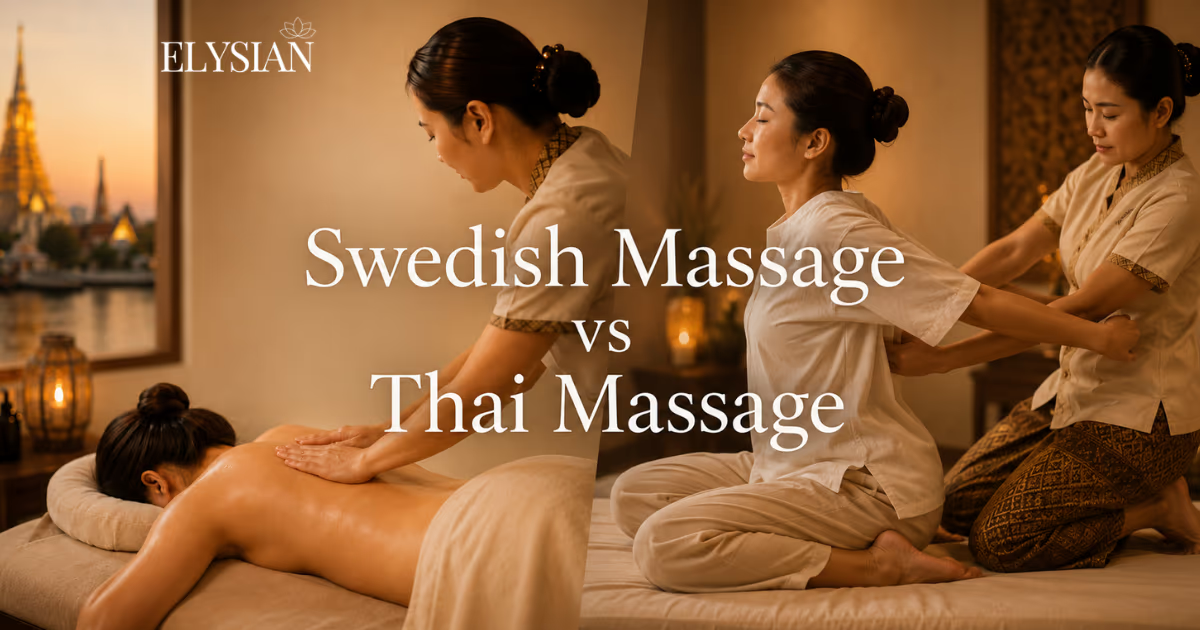
Here is the short answer to the Swedish vs Thai massage question. Thai massage is dry, done fully clothed, and built on pressure and assisted stretching, so it suits a body that feels stiff and compressed. Swedish massage is the classic oil treatment: you undress to your comfort, stay draped, and lie still while long gliding strokes calm you down. Aromatherapy oil massage is Swedish's scented cousin, using the same flowing strokes with essential oils chosen for a specific effect.
So it comes down to one thing: do you want to be stretched, or do you want to be soothed? Choosing wrong means missing what your body actually needs, so this guide breaks it down properly.
Thai massage is dry, clothed, and built on stretching
No oil touches your skin
Traditional Thai massage is a dry technique – no oils – and you stay fully clothed in loose garments the therapist brings. In your room it's done on a firm, flat surface, your own bed with fresh sheets laid down for the session.
The therapist uses hands, thumbs, elbows, knees, and even feet to apply pressure along the body's energy lines. What makes it distinctive is the assisted stretching: she moves your body into yoga-like positions, gently pulling and rotating limbs to open joints and release tension. Some call it "lazy person's yoga."
The technique grew out of temples, not spas
Thai massage blends Indian Ayurvedic influence, Chinese acupressure, and indigenous Thai healing, and it began in temples as a holistic approach to wellbeing rather than simple physical manipulation. Wat Pho in Bangkok remains its spiritual home.
It is a genuine tradition rather than a tourist product. UNESCO added Nuad Thai to its Representative List of the Intangible Cultural Heritage of Humanity in 2019. Book one here and you are getting it at the source.
Oil massage relaxes you through rhythm, not pressure
Long strokes, warm oil, and you lie still
Oil massage applies oil directly to the skin. You undress to your comfort level and lie on your bed, draped with fresh sheets the therapist adjusts as she works.
She uses long, flowing strokes that glide across the muscles. The oil reduces friction, allowing smooth, continuous contact that calms you at both the physical and nervous-system level. Where Thai massage works targeted pressure points, oil massage relieves tension through rhythm and repetition.
"Oil massage" is the umbrella. Underneath it sit two treatments most visitors end up choosing between: Swedish and aromatherapy.
Swedish is the gentlest place to start
Swedish is the classic Western relaxation massage, and it is the one most people picture when they hear the word. The therapist works long gliding strokes and kneading over the muscles with plain oil, at a steady, unhurried rhythm.
It is deliberately gentle. Cleveland Clinic describes Swedish as "typically a full-body massage that uses a gentle touch" and calls it "a good pick for people new to massages." That is a fair summary. If you have never had a professional massage, or you simply want to switch off without being worked on hard, this is the safe first choice.
At ฿1,000 for 60 minutes it is also the same price as traditional Thai and the cheapest oil option on the menu.
Aromatherapy adds oils chosen for an effect
Thai aromatherapy massage combines the oil technique with essential oils chosen for a specific effect: lavender to relax, peppermint to refresh, lemongrass to ease soreness. The benefit goes beyond the scent – the oils absorb through the skin, working through your system as the strokes work the muscles.
Swedish vs Thai Massage: the Key Differences
If you only compare two, compare these. Swedish and Thai sit at opposite ends of the menu, and almost every other treatment falls somewhere between them.
Thai massage
- Pressure: firm, targeted compression and held pressure points, medium to strong
- Setting: fully clothed, on a firm surface – no oil, no undressing
- You: an active participant, stretched and repositioned throughout
- After: loose, tall, and awake
Swedish massage
- Pressure: gentle to medium, long gliding strokes and kneading
- Setting: undressed to your comfort, draped with fresh sheets, plain oil
- You: still and passive – the stillness is part of the relaxation
- After: calm, heavy, and ready for bed
Aromatherapy oil massage works exactly like Swedish, with the same oiled, flowing strokes. The difference is the essential oils, chosen for a particular effect. It costs a little more.
| Treatment | Clothed? | Oil? | Best when you feel | From (60 min) |
|---|---|---|---|---|
| Traditional Thai | Yes | No | Stiff, compressed, folded up | ฿1,000 |
| Swedish relaxation | No | Yes | Wired, tired, unable to switch off | ฿1,000 |
| Aromatherapy oil | No | Yes | Restless, racing mind, poor sleep | ฿1,200 |
Every rate is flat and published up front, so nothing is added at the end.
Thai massage is the one for stiffness and flexibility
The assisted stretching directly improves flexibility – tight muscles lengthen, stiff joints mobilise. According to Cleveland Clinic, Thai massage increases flexibility and range of motion by improving blood flow and oxygen supply to the muscle. For travellers cramped in airplane seats, that addresses exactly what flying does to the body.
It also handles chronic tension well: deep pressure plus stretching reaches connective tissue and deeper layers that lighter work doesn't. Many people feel energised rather than sleepy afterwards. And there's a practical bonus – no oil residue, so you can head straight back out without needing to shower.
Oil massage is the one for stress and heavy legs
Oil massage excels at stress relief. The continuous gliding strokes, the warm oil, and the steady rhythm calm the nervous system deeply – many people drift off during the treatment.
The long strokes improve circulation, carrying oxygen to the muscles and clearing metabolic waste, while quality oils nourish the skin. After a day on your feet around Bangkok, oil massage soothes without the intensity of deep dry pressure.
Choose Thai when you feel stiff and compressed
- After a long flight – flying compresses your spine and tightens hip flexors; Thai stretching opens what flying closes
- For chronic stiffness – desk work, posture, and old niggles respond well to the pressure-and-stretch combination
- When you want energy – Thai tends to leave you alert, so it's the one to pick if you have evening plans
- If you'd rather stay clothed – full coverage in loose clothing, no undressing
Choose Swedish when you want to switch off
- For pure relaxation – when winding down is the goal, the sensory experience creates a deep calm
- For your first ever massage – Swedish is the gentlest introduction; nothing about it will catch you off guard
- For muscle soreness – tired muscles often prefer the gentler approach; the oil lets the therapist work thoroughly without irritation
- Before sleep – book it in the evening and let the lingering calm carry you to rest
- After a long day on your feet – heavy, swollen legs respond better to flowing strokes than to deep stretching
Choose plain Swedish if you simply want to switch off. Choose aromatherapy if you want the oils working on you too, and you do not mind the extra ฿200.
You do not always have to choose just one
You don't always have to choose just one.
Thai Herbal Compress
Combines Thai technique with heated herbal bundles: the therapist applies pressure and stretching, then presses warm compresses into the muscles. The heat relaxes the muscle and helps the herbs penetrate.
Thai Foot Massage
Focuses on the feet and lower legs using Thai pressure on points believed to correspond with organs throughout the body. It works well on its own or alongside a full-body treatment.
Deep Tissue
Uses oil but applies far deeper pressure than a standard oil massage, working slowly into the deeper muscle layers. It suits anyone who wants the comfort of oil with Thai-level intensity – read more about deep tissue massage.
How to decide in ten seconds
Two honest caveats before you book. If you have never had a massage and the idea of being stretched into yoga positions by a stranger makes you tense, do not start with Thai. Book Swedish, enjoy it, and try Thai on a later night once you know what you like.
And if what you actually want is a whole afternoon in a spa, with a sauna, a steam room, and a pool to move between, go and have that instead. An in-room massage gives you privacy and convenience, not facilities.
First time in Thailand? Try traditional Thai massage at least once – this is the birthplace of the technique, and you can get Swedish almost anywhere in the world.
The best approach is often both: Thai after your long flight to stretch and reset, then Swedish or aromatherapy oil later in the trip to decompress. You can see every treatment and rate on our pricing page, or arrange in-room massage in Bangkok in a single message.
Frequently Asked Questions
The simplest split is oil and stillness versus clothes and stretching. Swedish massage is an oil treatment: you undress to your comfort level, stay draped in a sheet, and lie still while the therapist works long, gliding strokes over the muscles. Thai massage uses no oil, you stay fully clothed in loose garments, and the therapist presses along the body and moves you through slow, assisted stretches. Swedish leaves most people sleepy and calm. Thai leaves most people loose and alert.
Swedish is a type of oil massage, so the terms overlap, but they are not identical. Swedish is the classic Western relaxation style built on long gliding strokes and kneading. Aromatherapy oil massage uses the same oiled, flowing approach but adds essential oils chosen for a specific effect, such as lavender to relax or lemongrass to ease soreness. If you simply want to switch off, Swedish is the plainer, cheaper choice.
It depends on what the trip did to you. After a long flight, when your hips and hamstrings are compressed from the seat, Thai massage stretches you back out. After a long day of walking and sightseeing, when your legs feel heavy and you want to sleep, Swedish is the kinder option. Many travellers book Thai early in the trip and Swedish later, which is a sensible way to get both.
Thai massage uses deep pressure but shouldn't be painful. Tell your therapist your preferences – a good practitioner adjusts the intensity to your comfort while still giving you the benefit of the work.
Yes. Thai massage improves flexibility, so you don't need to start flexible. Your therapist works within your current range of motion and gradually encourages it to open.
It depends on the cause. Thai massage helps with stiffness and poor flexibility, while oil or deep tissue works better for muscle fatigue and soreness. If in doubt, describe the pain when you book and we'll point you to the right one.
For a week-long trip, two or three sessions give you excellent recovery – many travellers book every other day. Listen to how your body responds and adjust from there.