Solo Female Traveler Massage Safety in Bangkok Hotels
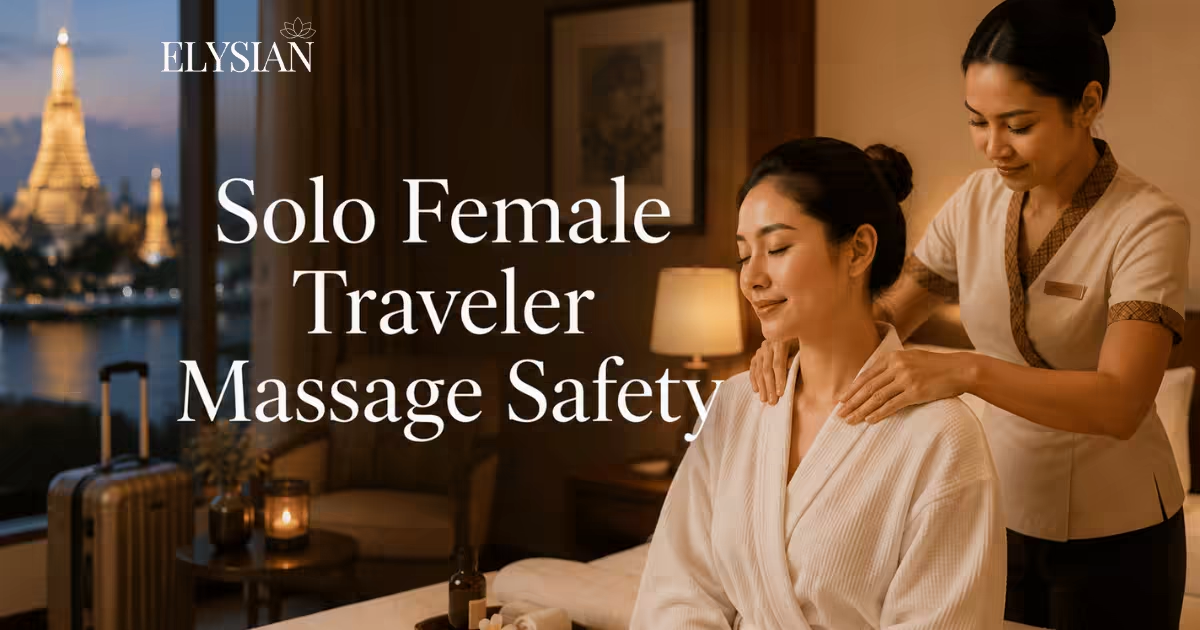
You are travelling alone, you have been on your feet since morning, and you would rather not go out again to find a spa. A massage in your hotel room is a reasonable thing to want. The safety of it is decided almost entirely before anyone knocks: book a licensed provider with a real public identity, let the front desk know she is coming, and put your valuables in the safe. Do those three things and an in-room massage is about as risky as ordering room service.
Solo female traveler massage safety is mostly a booking problem, not a massage problem. This guide covers what to check before you book, and what stays under your control once the door closes. Every therapist at Elysian is a woman, and the checks below are the ones I would want a guest to run on us before she ever sends a message.
The safety happens before she knocks
Most of what makes an in-room massage safe or unsafe is settled while you are still scrolling on your phone.
Once a therapist is at your door, your options narrow. You are tired, she has travelled across the city, and saying "actually, no" to a stranger takes a kind of nerve that most of us do not have at 9pm in a foreign country. That is not a character flaw. It is just how the moment works, and it is the reason to do your thinking early.
So spend ten minutes on the provider before you book, and almost nothing after. The rest of this guide is in that order on purpose.
Check the licence, and check it before you book
Massage is a regulated trade in Thailand, which is a better safety net than most visitors realise.
Under the Health Business Establishment Act B.E. 2559 (2016), massage businesses need a licence from the Department of Health Service Support at the Ministry of Public Health. The people doing the work are registered too. Thailand's own government service listing sets out what a registered service provider must be: at least 18 years old, holding a certificate accredited by the Department of Health Service Support, and meeting criminal-record conditions. That is a real vetting process with a government department behind it, not a badge a business prints for itself.
The gap is enforcement, and it is worth knowing the size of it. A study in the Journal of Health Science of Thailand found that of 8,293 businesses that needed a health-establishment licence, 85.64% had obtained one. Roughly one in seven did not.
We put our side of this in writing: how we screen our therapists covers the documents, the background check, and the skills assessment every therapist clears before her first booking.
A real business leaves a trail
The licence is one signal. The other is whether the provider exists in public in a way you could hold them to.
- A proper website with the services, the prices, and the contact details on it
- Prices published in numbers, not "message for a quote"
- Therapists with names and photos, not an anonymous pool
- Replies that come from a business account and read like a business
- Reviews that mention specific things: punctuality, skill, whether the session matched what was promised
Published pricing matters more than it looks. When the rate is printed on the website and flat, there is nothing to negotiate at your door and no surprise at the end. You will never have to discuss money while lying on a bed in a bathrobe, which removes a whole category of awkwardness for the price of a web page.
The same goes for names. You can read our therapists' profiles before you book and ask for one by name. Knowing who is coming, in advance, changes the feeling of the knock entirely.
Every Elysian therapist is a woman, and you should ask everywhere
For most women travelling alone, this is the first question and it deserves a direct answer rather than a paragraph of reassurance. All of our therapists are female. It is not a special request and there is no premium on it.
Ask this wherever you book, and get the answer in writing on WhatsApp or LINE rather than over the phone. Two reasons. A provider who will not tell you who is coming to your room has already told you something useful. And a written confirmation means the person at your door either matches it or does not, which is a much easier thing to act on than a vague feeling.
Tell the front desk, because that is your safety net
The instinct is to keep it quiet. Do the opposite.
Nearly every Bangkok hotel asks a visiting therapist to check in at reception, show ID, and sometimes leave that ID at the desk during the session. Some guests find this intrusive. I would reframe it: the hotel now has a record of who came to your room, when she arrived, and when she left. You will not find a better safeguard than a front desk that knows exactly who is upstairs, and it costs you a thirty-second heads-up on your way through the lobby.
It is practical, too. Reception is where in-room bookings usually go wrong, and almost always for boring reasons: nobody told them, so they will not let her up. Our guide to in-room massage rules at Bangkok hotels covers the policies and the check-in protocol properly.
Know who is at the door before you open it
Every hotel safety guide tells you not to open the door to someone you were not expecting. That advice does not stop applying because you booked the visit.
Get the therapist's name when you confirm, and ask the provider to message you when she is on her way. Most Bangkok hotels will have reception ring your room before sending anyone up, which gives you a second confirmation from a person who works for the hotel rather than for the massage service. Use the peephole. If the woman outside does not match what you were told, or someone else is standing with her, do not open the door. Call reception instead and let them handle it.
This almost never happens. It costs nothing to be able to rule it out.
Ten minutes of room setup, and you are done
Nothing here is dramatic. It is the same short list you would run before housekeeping arrives.
Put your passport, your cash, and anything valuable in the room safe. Not because you suspect anyone, but because a bag you are half-watching for an hour is an hour you did not relax. Keep your phone within reach of the bed and your room key where you can see it. Leave a lamp on rather than the overhead light: you want to be comfortable, not staged.
Then shower, and change into something loose if you have booked traditional Thai massage, which you stay fully clothed for from start to finish. For oil treatments, you undress only to the level you are comfortable with and stay covered by a towel or sheet the whole time, with only the part being worked on uncovered. If nobody explains that to you before they start, ask.
You are in charge of the hour, not a guest in it
This is the part people forget, and it is the one that matters most once the door is closed.
Tell her about injuries, a sore shoulder, a sunburnt back, or anywhere you would rather she avoided. Say when the pressure is too much, because Thai massage can be genuinely firm and "softer" is the easiest word in the world to translate. Talk if you want to, or say you would rather be quiet, and a good therapist will simply follow your lead.
And if at any point you want the session to stop, it stops there and then, not at the end of the hour. You are paying, it is your room, and a professional will pack up and go without making it strange. Knowing that in advance is what lets most people actually relax into the massage, which was the whole point of booking it.
The red flags, in one place
If any of these show up, do not book. There will be another provider.
- No fixed price before arrival, or a price that changes when she gets there
- No website, no business name, no way to identify who you are dealing with
- Refusal to confirm the therapist's name or that she is licensed
- Pressure to pay in full, in advance, by transfer to a personal account
- Contact only through an anonymous account with no business identity behind it
- Anything you cannot get a straight answer to
That last one covers most of it. A legitimate service in Bangkok answers direct questions directly, because it fields them every day and has nothing to protect.
When an in-room massage is not the right call
I would rather say this than pretend it suits everyone.
If the thought of being alone in a closed hotel room with someone you have not met makes you tense, you will not relax, and you will have paid for an hour of quietly monitoring a stranger. That is not a failure of nerve, it is useful information. Book the hotel spa instead, or a reputable day spa, where there are staff in the corridor and other people in the building. The massage will be better because you will actually let go.
The same is true if what you want is the full spa afternoon with a sauna and a steam room. In-room massage buys you privacy and convenience. It does not come with facilities.
Booking one, safely
Almost nothing on this list is about the massage itself. It is ten minutes of checking, done once, so that you can stop checking. That matters because a massage you spend an hour quietly monitoring is not doing you any good, and you booked it to switch off.
If you want us to be that provider, a licensed female therapist can be at your hotel room in about 30 minutes, any day from 10 AM to 2 AM. Message us on WhatsApp or LINE with your hotel and room number, and ask us anything on this list before you commit. Booking in-room massage in Bangkok should be the easy part of your day, not one more thing to worry about.
Frequently Asked Questions
Yes, when you book a licensed provider and keep the hotel involved. Nearly every Bangkok hotel asks a visiting therapist to check in at reception and show ID, which means the front desk has a record of who came to your room and when. Book somewhere with a real website, published prices, and named therapists, and the risk drops to roughly what you accept at any spa.
Every Elysian therapist is a woman. Most guests travelling alone prefer that, and it is the norm rather than a special request. Wherever you book, ask the question directly and get the answer in writing before you confirm, because a provider who will not tell you who is coming has told you something already.
Ask, and ask before you book rather than at the door. Massage in Thailand is regulated under the Health Business Establishment Act, and a registered provider must be at least 18, hold a certificate accredited by the Department of Health Service Support, and meet criminal-record conditions. A legitimate service will answer the question without hesitating.
Yes. It is your best safety feature and it costs you thirty seconds. Reception will usually take the therapist's ID and note the visit, so the hotel knows exactly who is upstairs. It also stops the awkward scene where your therapist is stuck in the lobby and cannot come up.
Get her name when you confirm the booking, and ask the service to message you when she is on her way. Most Bangkok hotels also ring your room from reception before sending anyone up, so you get a second confirmation from hotel staff. Check the peephole before you open, and if the person outside does not match what you were told, do not open the door. Call reception and let them deal with it.
Not for traditional Thai massage. You stay fully clothed in loose, comfortable clothes for the whole session. For oil treatments you undress only to the level you are comfortable with, and you stay covered by a towel or sheet throughout, with only the area being worked on uncovered. Many guests keep their underwear on.
Say so, and know that you can end the session at any point. You are the one paying, it is your room, and a professional therapist will stop or adjust the moment you ask. Pressure that hurts, an area you would rather she left alone, a conversation you are not enjoying: all of it is yours to change.
Put your passport, cash, and jewellery in the room safe before she arrives, the same as you would before housekeeping comes. It is not an accusation, it is ordinary travel habit, and it means you can relax instead of half-watching your bag for an hour.