In-Room Massage vs the Hotel Spa in Bangkok
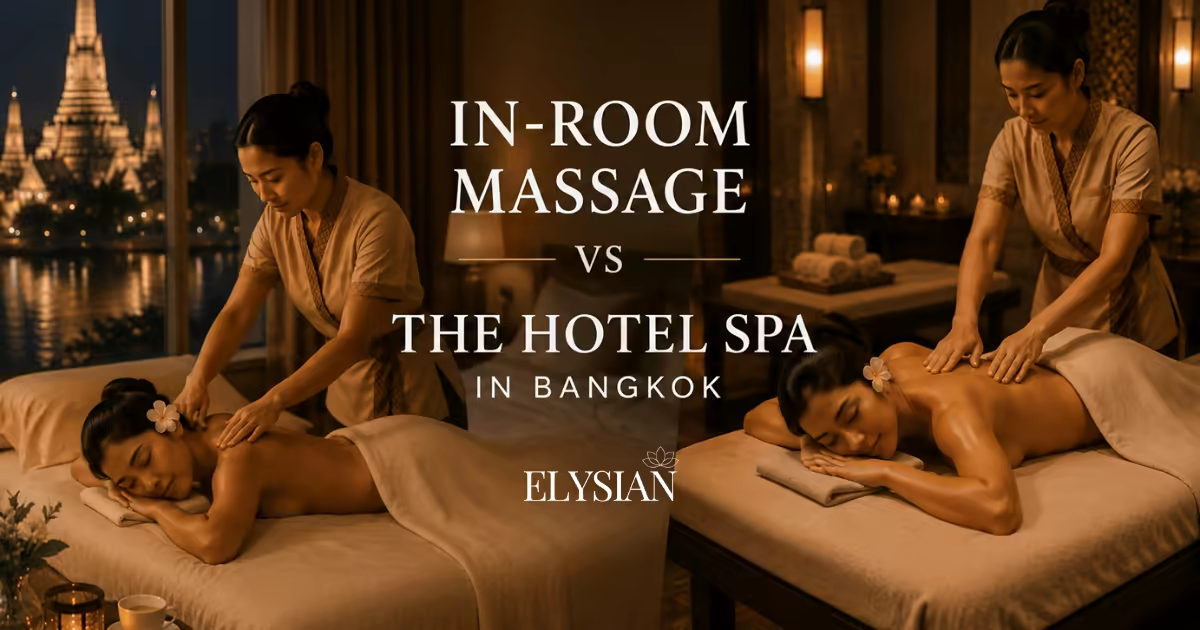
For most hotel guests in Bangkok, an in-room massage is the easier choice: it comes to your room, runs late, costs less, and lets you go straight to sleep afterwards. The hotel spa is the better pick when you want the extras a spa has and your room does not, like a sauna, a steam room, or a pool. That is the whole comparison in two sentences, and the rest of this guide fills in the detail so you can match the choice to how your trip is actually going.
In-room massage vs hotel spa is not really a question of which is better. Both can be excellent. They are good at different things. The right choice comes down to the time of day, how much you value privacy, and whether a spa's extra facilities matter to you or you would rather have a good massage and an early night.
The short answer for a hotel guest
If you are tired, jet-lagged, or you just want to be looked after and then sleep, book the in-room massage. If you want to make an afternoon of it, use a sauna and a pool, and enjoy a change of scene, book the hotel spa.
Wellness is a bigger part of travel than it used to be. Global wellness tourism spending reached 894 billion US dollars in 2024, according to the Global Wellness Institute, up from 439 billion in 2012. A massage on your trip is normal now, so it is worth a moment to pick the version that fits your day rather than defaulting to whatever is nearest.
In-room massage vs the hotel spa, side by side
Here is how the two compare on the things that actually decide it.
| What matters | In-room massage | Hotel spa |
|---|---|---|
| Where it happens | Your own room, on your own bed | A treatment room you travel to |
| Hours | 10 AM to 2 AM | Usually closes around 9 to 10 PM |
| Privacy | Total, just you and the therapist | Shared corridors and waiting areas |
| Getting there | Therapist comes to you, about 30 minutes | You go to the spa, then back |
| Price | Flat per-person rate, from ฿1,000 | Usually higher, venue included |
| Facilities | None beyond the massage | Sauna, steam, pool, packages |
| After the massage | Straight into bed | Dress and walk back to your room |
Read the table by what you value. If the bottom two rows matter most to you, the spa is worth the trip. If the rest matter more, in-room is the simpler win.
Where in-room massage wins for a traveller
For someone staying in a hotel and living out of a suitcase, the in-room advantages line up with what travel actually takes out of you.
The hours are the big one. Most hotel spas are closed by the time a long dinner or a late flight is done, while an in-room therapist can arrive as late as 2 AM. Land at midnight, message, and someone can be at your room in about 30 minutes. No spa in the building is open then.
Then there is the part that matters most after a hard travel day: you go straight to sleep. There is no getting dressed and walking back through the lobby, no lift, no winding back up after you have wound down. For any stay longer than a night, the Sleep Foundation says easing jet lag means acclimatising to your destination's day-night cycle, and a massage that ends with you already in bed at local bedtime helps you settle into it. You relax, and you are already where you need to be.
Privacy is the other one. It is just you and your therapist in your own room, with no shared waiting area and no treatment room that the next guest used an hour ago. She brings fresh sheets and lays them on your bed, so there is no table to set up and nothing bulky in the room. For a lot of travellers, and especially anyone travelling alone, that private setup is the whole appeal. Our guide to what to expect from an in-room hotel massage walks through how a session runs from the knock at the door.
Price: what you actually pay
This is usually where in-room pulls ahead.
A hotel's in-house spa has to cover the cost of the venue, the treatment rooms, and the sauna and pool you may or may not use. That shows up in the treatment price, which tends to sit well above a straightforward massage. An in-room service skips all of that. You pay a flat per-person rate with travel to your hotel included, starting at ฿1,000 for a 60-minute traditional Thai massage. There is no facility fee folded in, because there is no facility, just the massage and the therapist. Every treatment and length sits on our pricing page.
The honest trade is simple. With in-room you are paying for the massage and the convenience, not for a sauna and a pool. If you were never going to use those anyway, you are not missing anything.
Where the hotel spa is the better call
In-room does not win everything, and it is worth being straight about when the spa is the right answer.
If you want to make a half-day of it, the hotel spa is built for that. A sauna, a steam room, a hot tub, or a pool to drift between treatments is something your room simply cannot offer, and an in-room massage will not pretend to. Spa packages that bundle a scrub, a facial, and a massage are also a spa thing, not an in-room thing.
There is also the change of scene. Part of a spa's appeal is leaving your room, walking into a calm, purpose-built space, and letting someone else set the mood. On a slow day with nothing booked, that outing can be the point rather than a chore. If you want more than a massage, or you simply want to be somewhere that is not your room for a couple of hours, go to the spa.
How to choose, by how your trip is going
Match the choice to the day rather than picking one forever.
Book in-room when
- You have just landed or you are jet-lagged
- It is late and the spa is closed
- You want privacy and an early night
- You would rather not travel across the hotel
- You want a good massage without the extras
Book the hotel spa when
- You want a sauna, steam room, or pool
- You have a slow half-day to fill
- You want a multi-treatment package
- A change of scene is part of the treat
- You are celebrating and want an occasion
Plenty of trips have room for both. Use the spa on a lazy afternoon when you want the facilities, and keep in-room for the nights you come back late and just want to sleep well. If you are still working out when in the trip to fit a massage at all, our guide to the best time to get a massage on a Bangkok trip covers the timing.
Book an in-room massage in Bangkok
If the in-room case fits your trip, it is a single message away. No booking a slot days ahead, no travelling across the hotel, no closing time to beat.
A licensed therapist can be at your hotel room in about 30 minutes, any day from 10 AM to 2 AM, and works on your own bed with fresh sheets. Message us on WhatsApp or LINE with your hotel, your room number, and the treatment you want. You can book in-room massage in Bangkok in a single message, and if the hotel spa turns out to suit your day better, that is a good choice too.
Frequently Asked Questions
Neither is better outright; they suit different moments. An in-room massage wins on privacy, late hours, and not having to leave your room, which is why it suits a jet-lagged or tired traveller. The hotel spa wins if you want facilities like a sauna, steam room, or pool, and a change of scene. For a guest who just wants a good massage and then sleep, in-room is usually the easier choice.
A hotel spa is a fixed venue inside the hotel that you travel to and book into, with treatment rooms and often a sauna, steam room, and pool. An in-room massage comes to you: a licensed therapist arrives at your room, works on your own bed with fresh sheets she brings, and leaves when it is done. One is a place you go; the other comes to you.
Usually, yes. Hotel in-house spas carry the cost of the venue and facilities, so their treatment prices tend to be higher. An in-room service charges a flat per-person rate with travel included, starting at 1,000 baht for a 60-minute traditional Thai massage. You trade the spa's sauna and pool for a lower price and total privacy.
Yes, with an in-room service. Most hotel spas close around 9 or 10 PM, but an in-room therapist can come to your room from 10 AM until 2 AM. That late window is one of the main reasons tired or jet-lagged travellers choose in-room over the hotel spa, especially after a late flight or a long dinner out.
No, and you do not need one. The therapist works on your own bed, laying down fresh sheets she brings for the session. There is no table to set up and nothing bulky in the room. A hotel spa uses fixed treatment tables in its rooms, which is one real difference in setup, but the quality of the massage itself does not depend on the surface.
Choose the hotel spa when you want the facilities: a sauna, steam room, hot tub, or pool to use before or after your treatment, or a spa package that bundles several treatments. It also suits a slow half-day when getting out of the room and into a different space is part of the appeal. If you want more than a massage, the spa is the better call.